A program for high school, university and adult groups on our nature campus near Ubud. Plant rice, learn gamelan, build with bamboo and live the Balinese calendar with the village around us, for a full semester or a shorter stay.
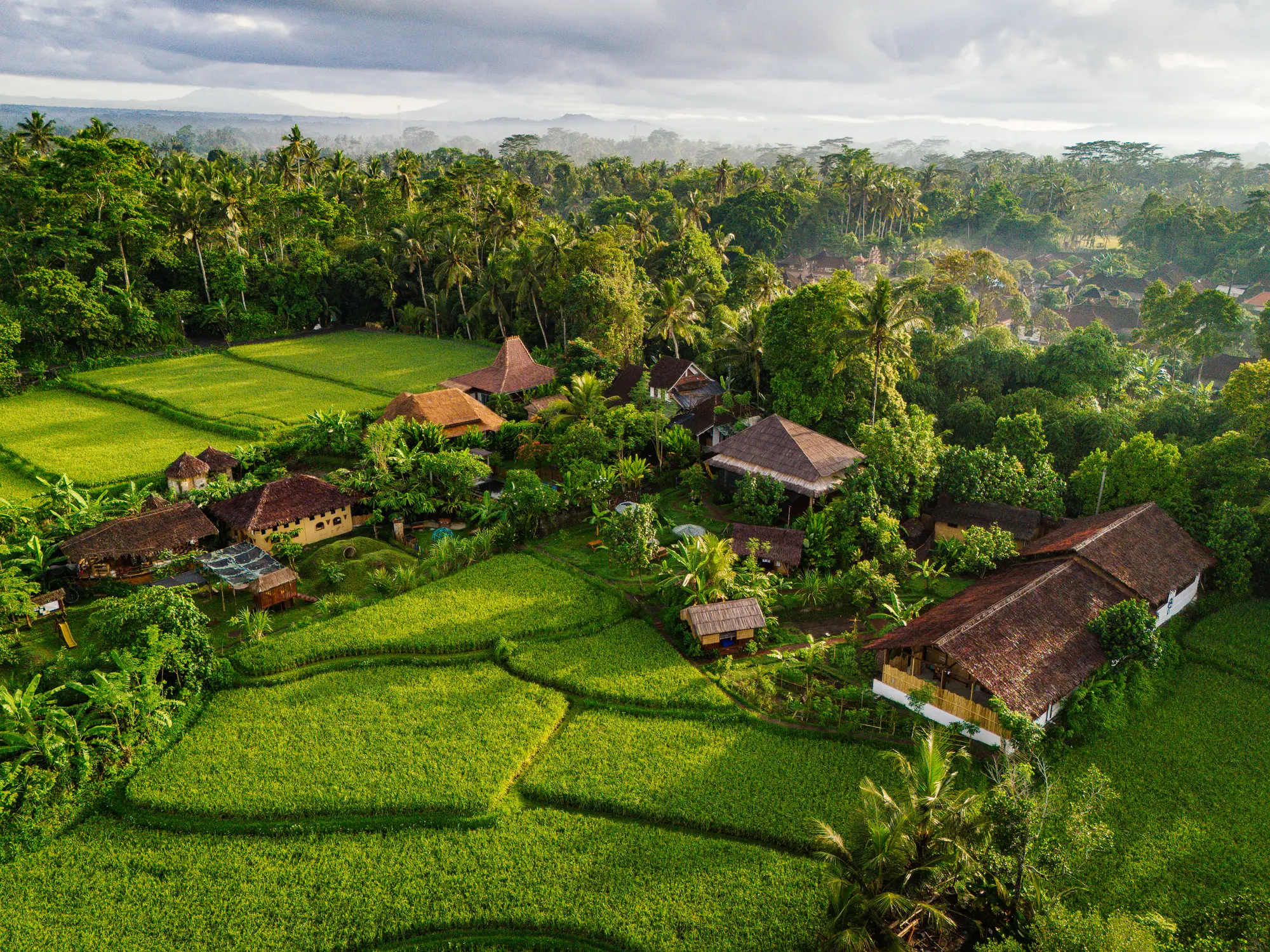
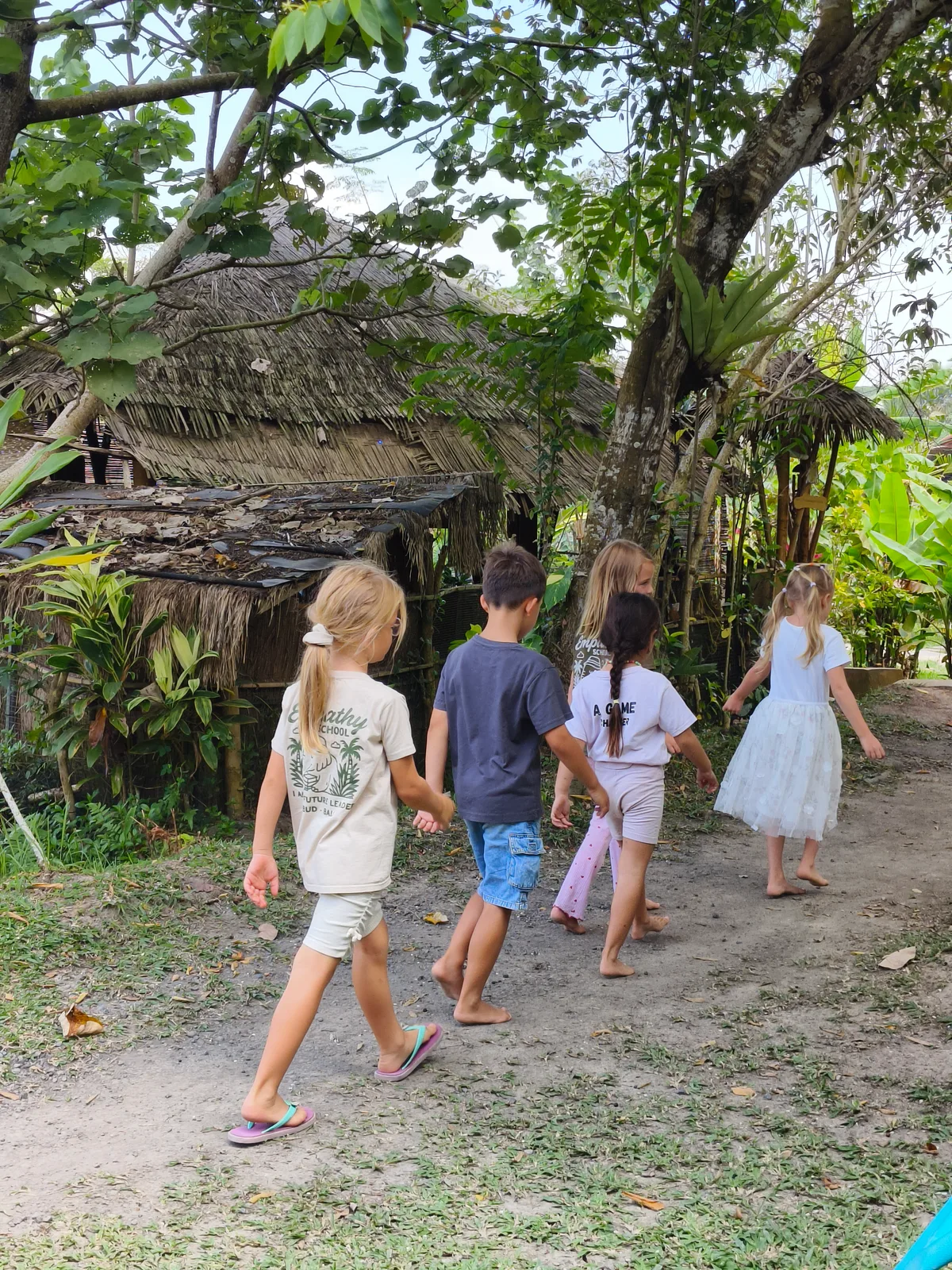
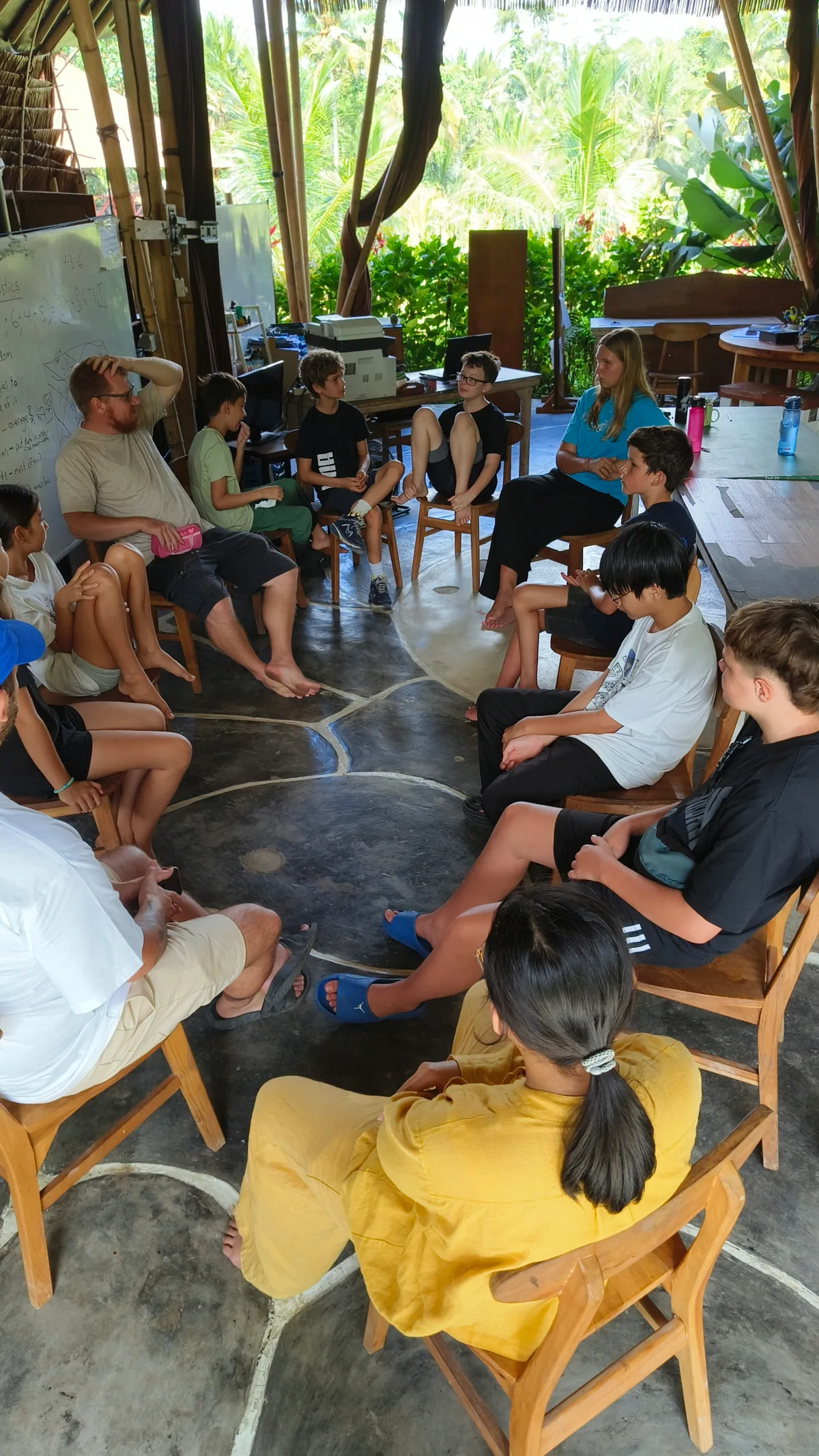
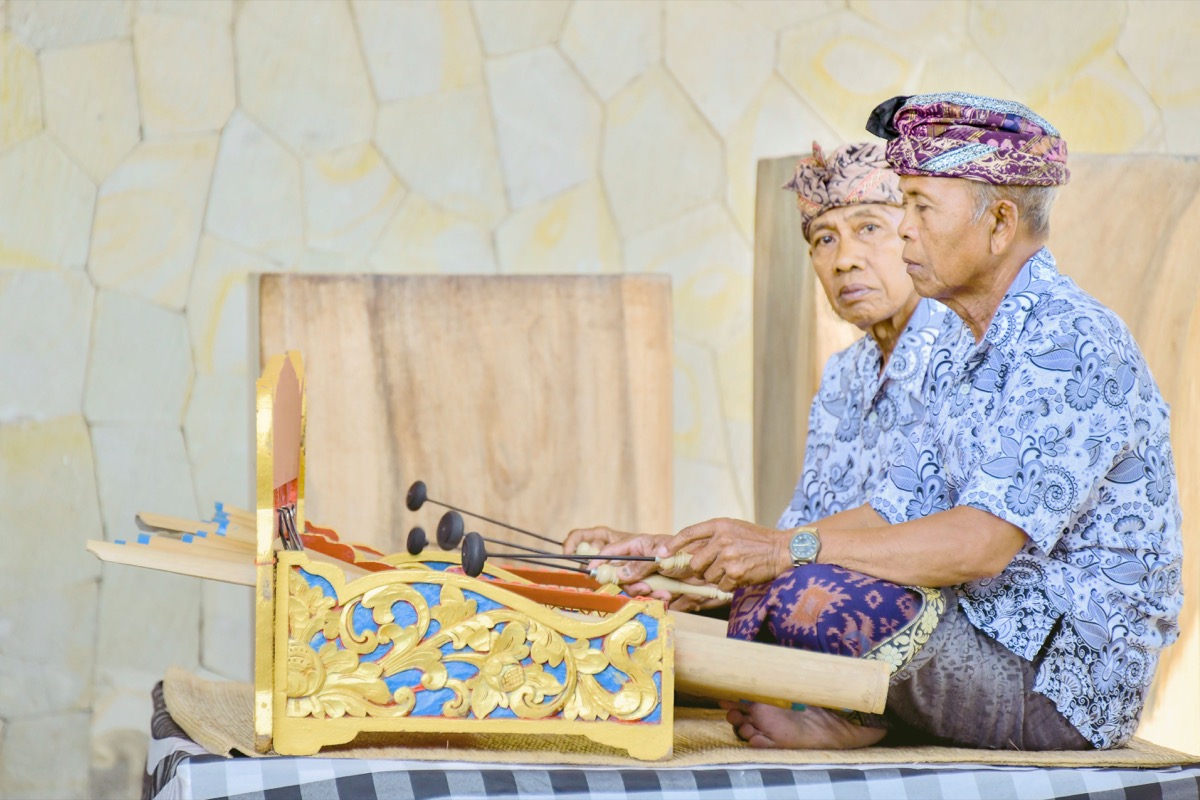
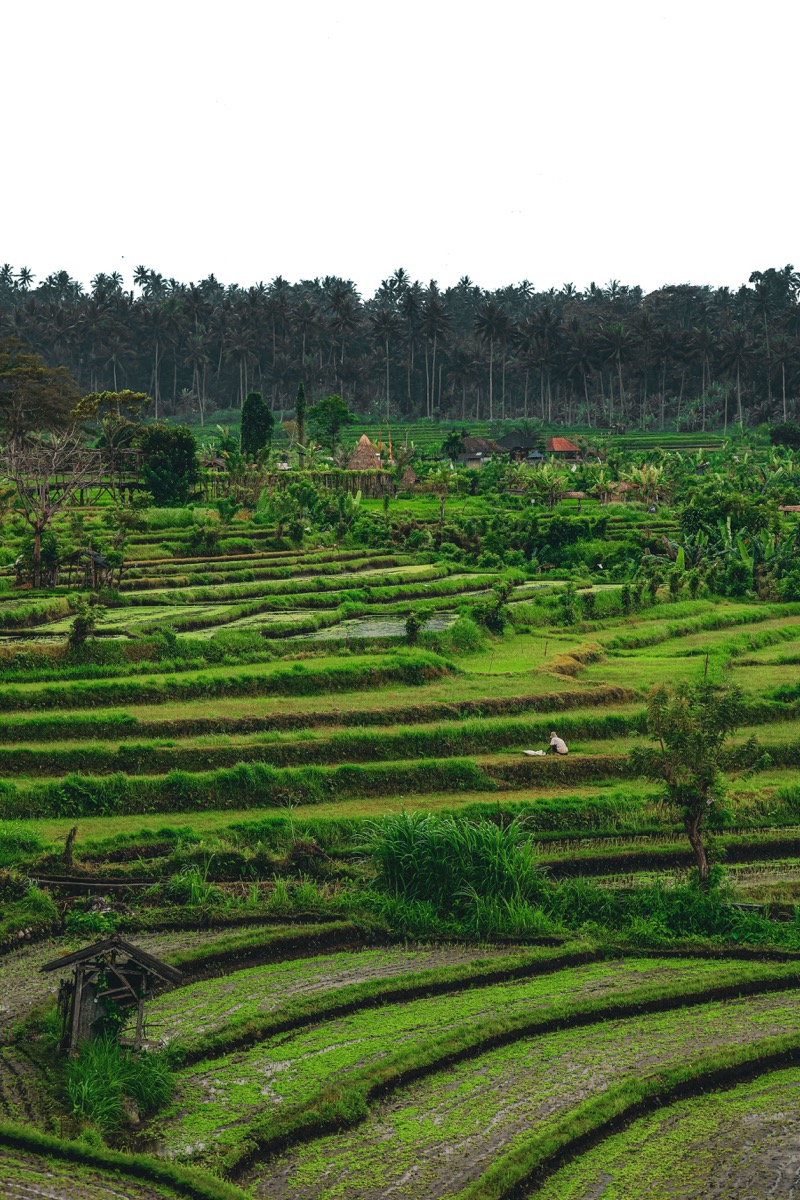
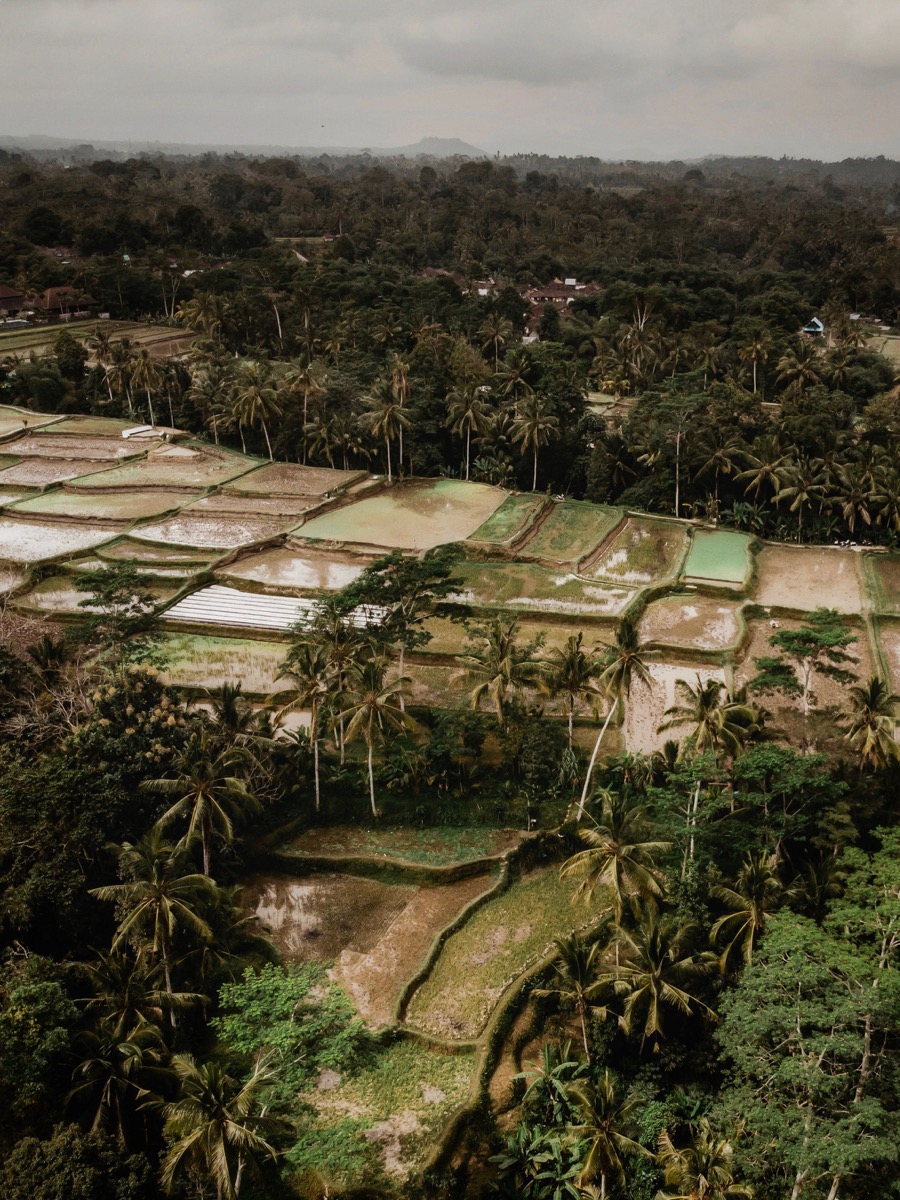
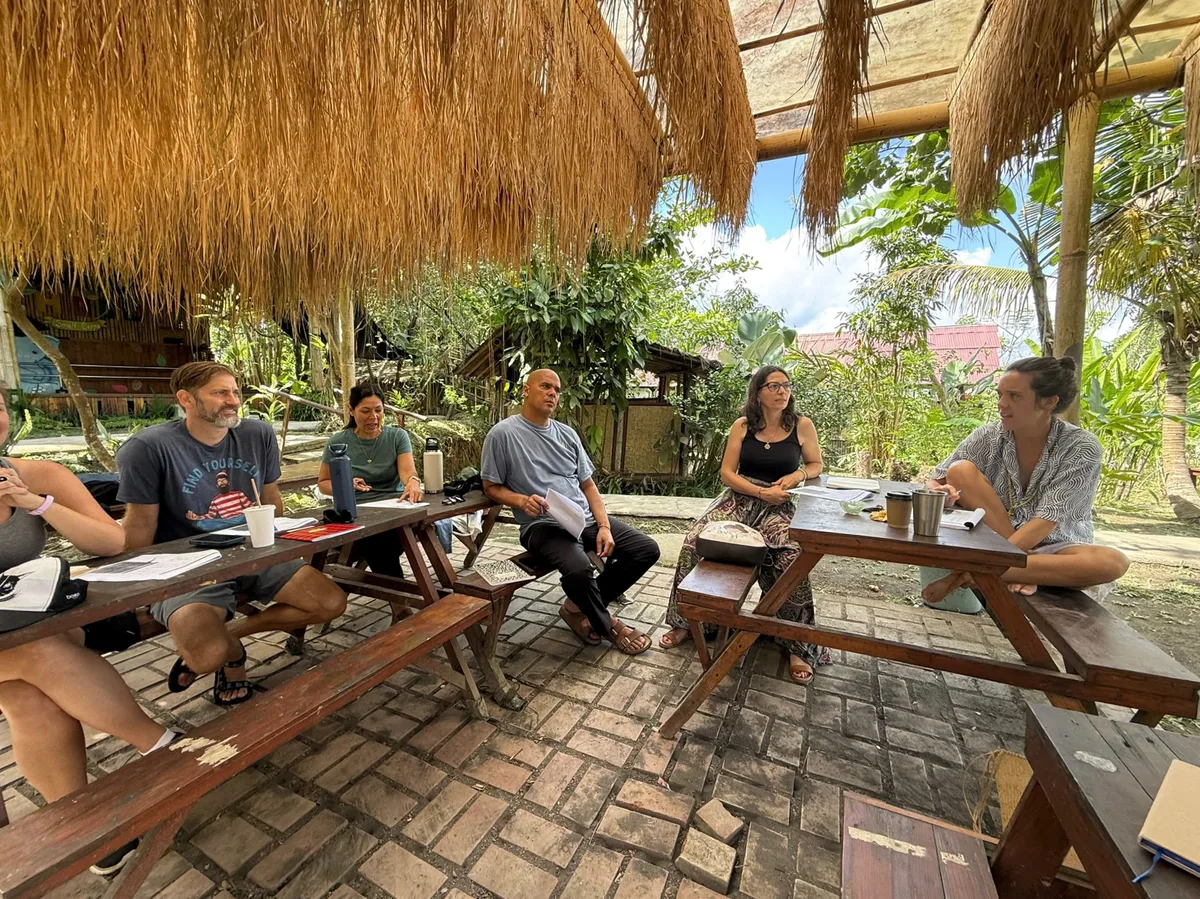
Empathy School Bali sits among the rice fields of Pejeng, a village near Ubud that was one of the early royal centres of Bali. A Semester in Bali brings visiting groups into the life of the school and the village. Students learn the Balinese arts from the carvers, ceramicists, gamelan players and dancers on our teaching staff, work in the paddies a short walk from campus, and take part in village ceremonies as guests.
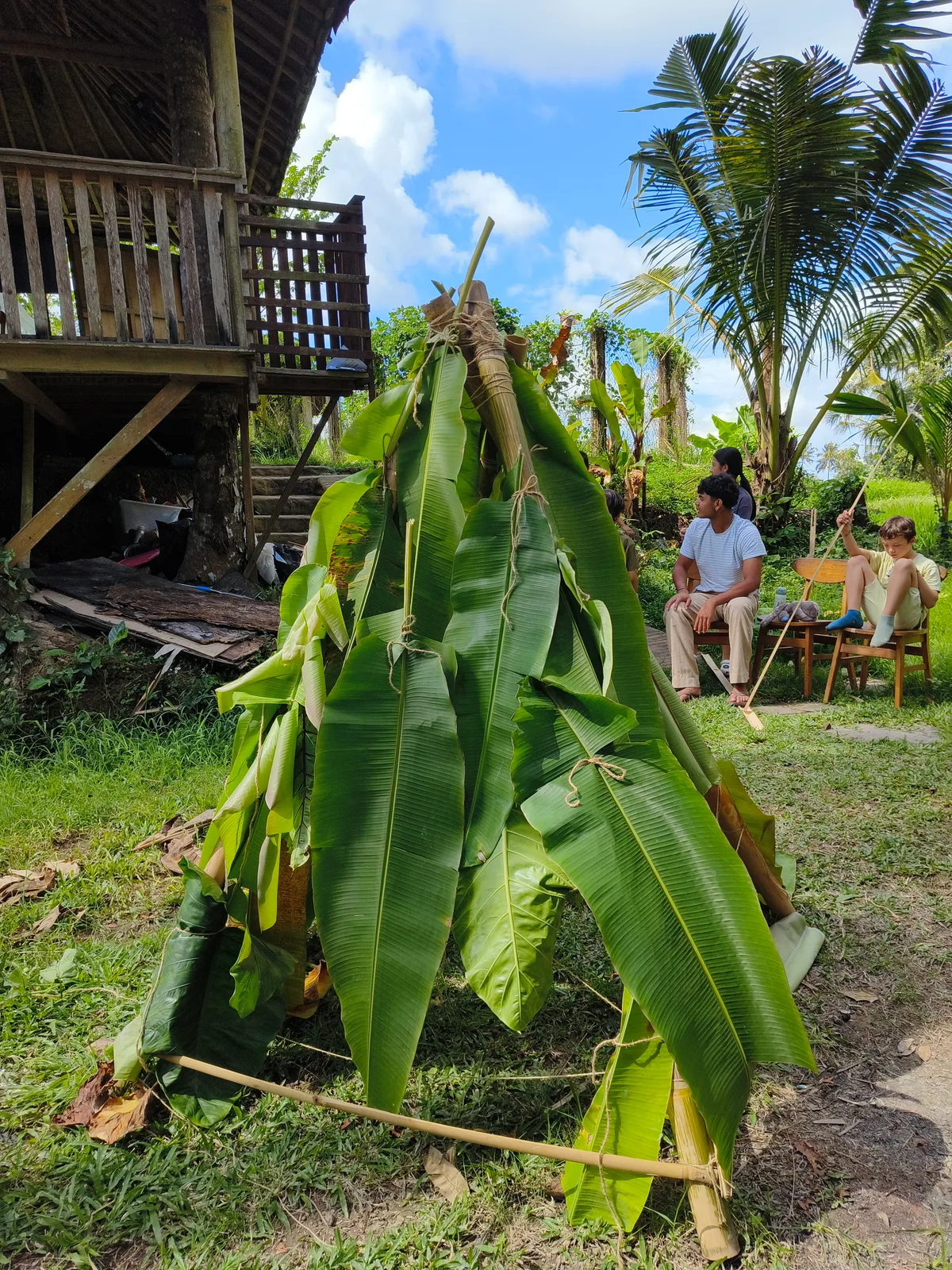
Groups also build things the village keeps using after they leave: bamboo footbridges across the campus ravine, a thatched pavilion, a structure the village council asks for, and a giant kite that goes to the village at the end of the stay.
Who it is for
High school groups.
Students in their final years of school, travelling with their own teachers.
University groups.
Field courses and study abroad groups in education, anthropology, environmental science, art and music.
Adult groups.
Teachers, educators and organisations who want to learn Balinese culture by doing it.
We take groups, not individual students. A school, university or organisation books the program for its own group, and the group stays together for the whole program.
A day on campus
Time
What happens
9:00 to 9:30
Morning circle and Bahasa Indonesia
9:30 to 12:00
Outdoor work while it is cool: rice, building, field science, crafts and trips
12:00 to 12:45
Lunch
12:45 to 14:00
Shaded work: gamelan, dance, wayang and the empathy lesson
14:00 to 15:00
Herb garden, then trampoline or sport
A few activities run into the evening: the village ogoh ogoh build, the wayang night, the camping night and the overnight trip to Mount Batur.
How the semester unfolds
Arrive and belong.
The first weeks. Students learn temple dress and etiquette on day one, then a ceremony welcomes the group to campus. They learn how Balinese society is organised, spend a full week in the rice fields and try every craft and art before choosing their own.
Specialise and build.
The middle of the term. Each student commits to gamelan, dance or wayang, and to one craft. Crews build the bridges, the pavilion and the village project. Short units and trips fill the mornings, including the overnight at Mount Batur.
Perform and hand over.
The final weeks. The kite flies over the rice fields, the wayang group performs for families, the finished work is handed to the village, and the group closes with a festival for the whole school.
Shorter stays follow the same pattern with fewer activities.
The activities
What groups build and leave behind
Ogoh ogoh
CultureProjectsTrips
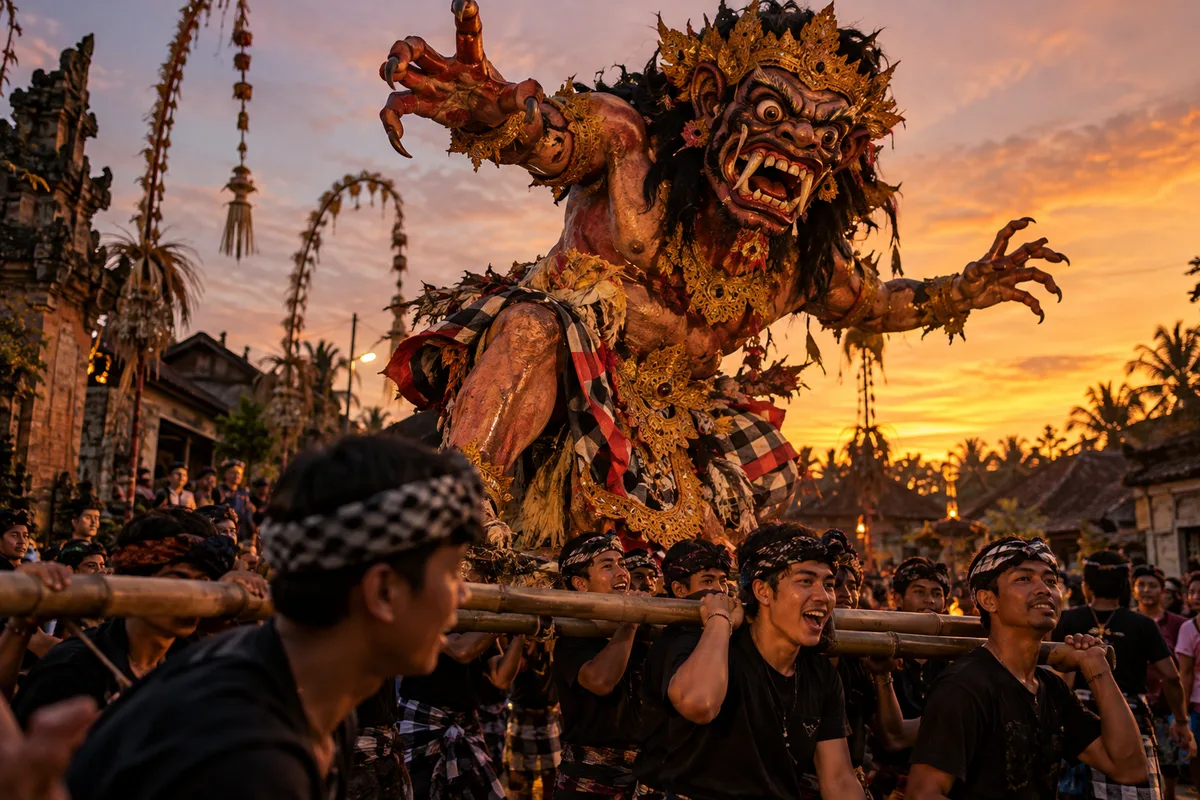
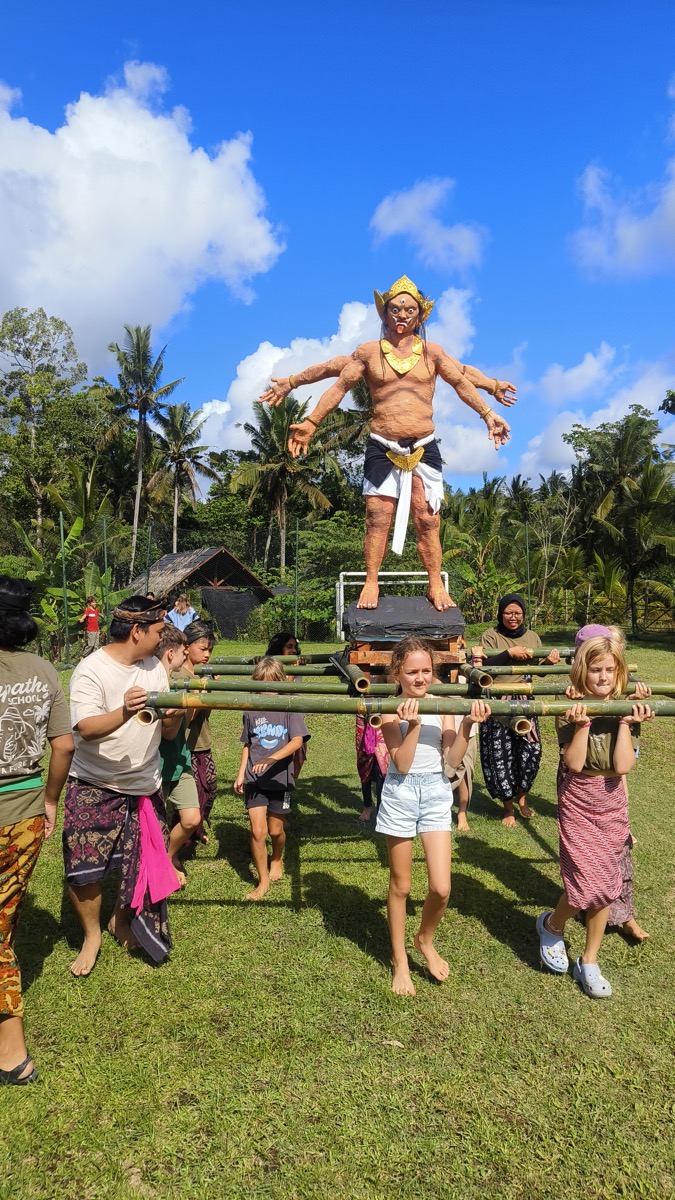
Before Nyepi, the Balinese day of silence, every village builds giant ogoh ogoh figures to parade through the streets and then burn. Students join the village youth at their build in the evenings and make a smaller figure of their own on campus. For groups here in February and March.
Result: Their own figure paraded on campus, and a place at the village parade on the eve of Nyepi.
Bamboo footbridges
Nature and scienceProjects
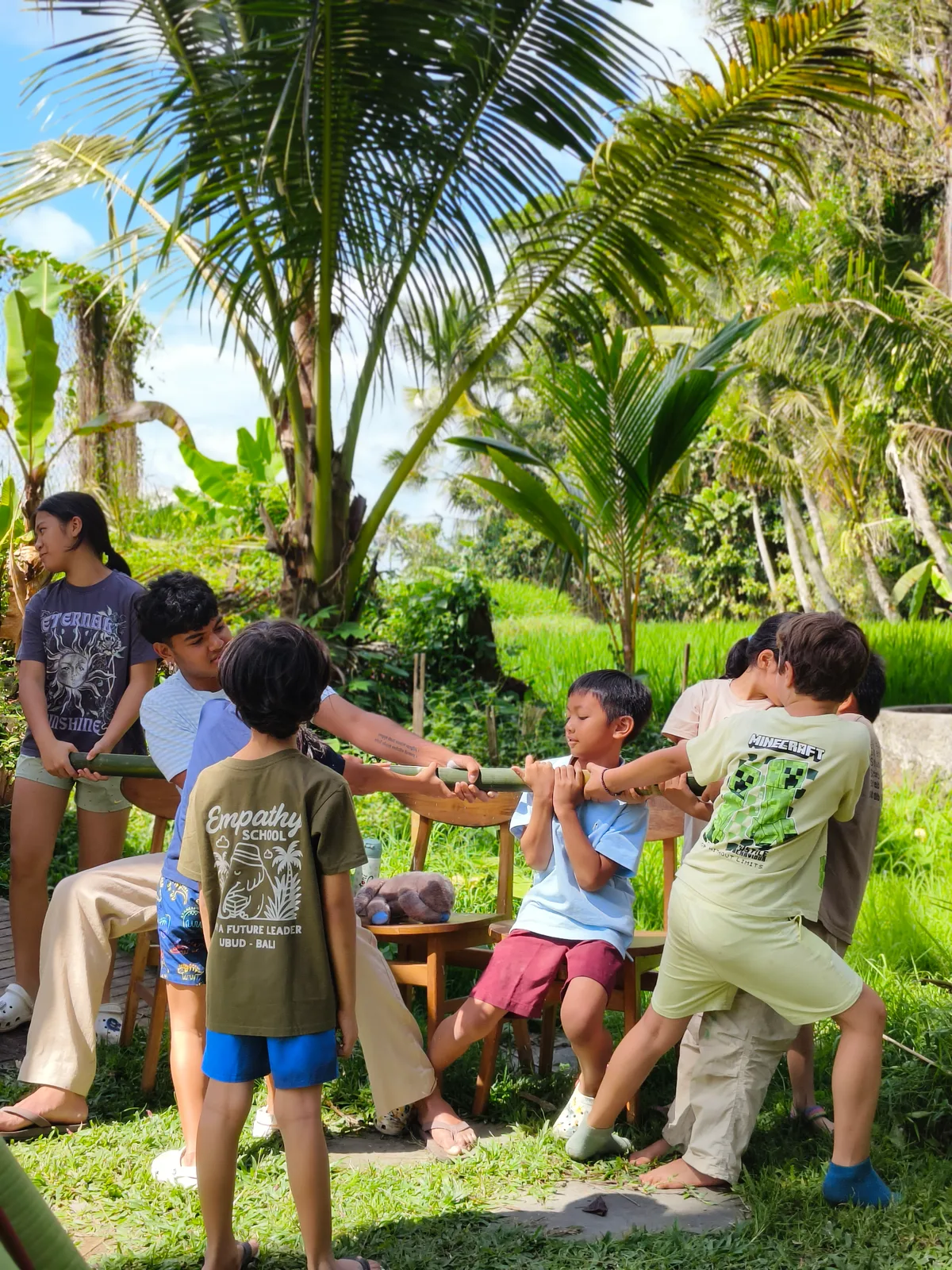
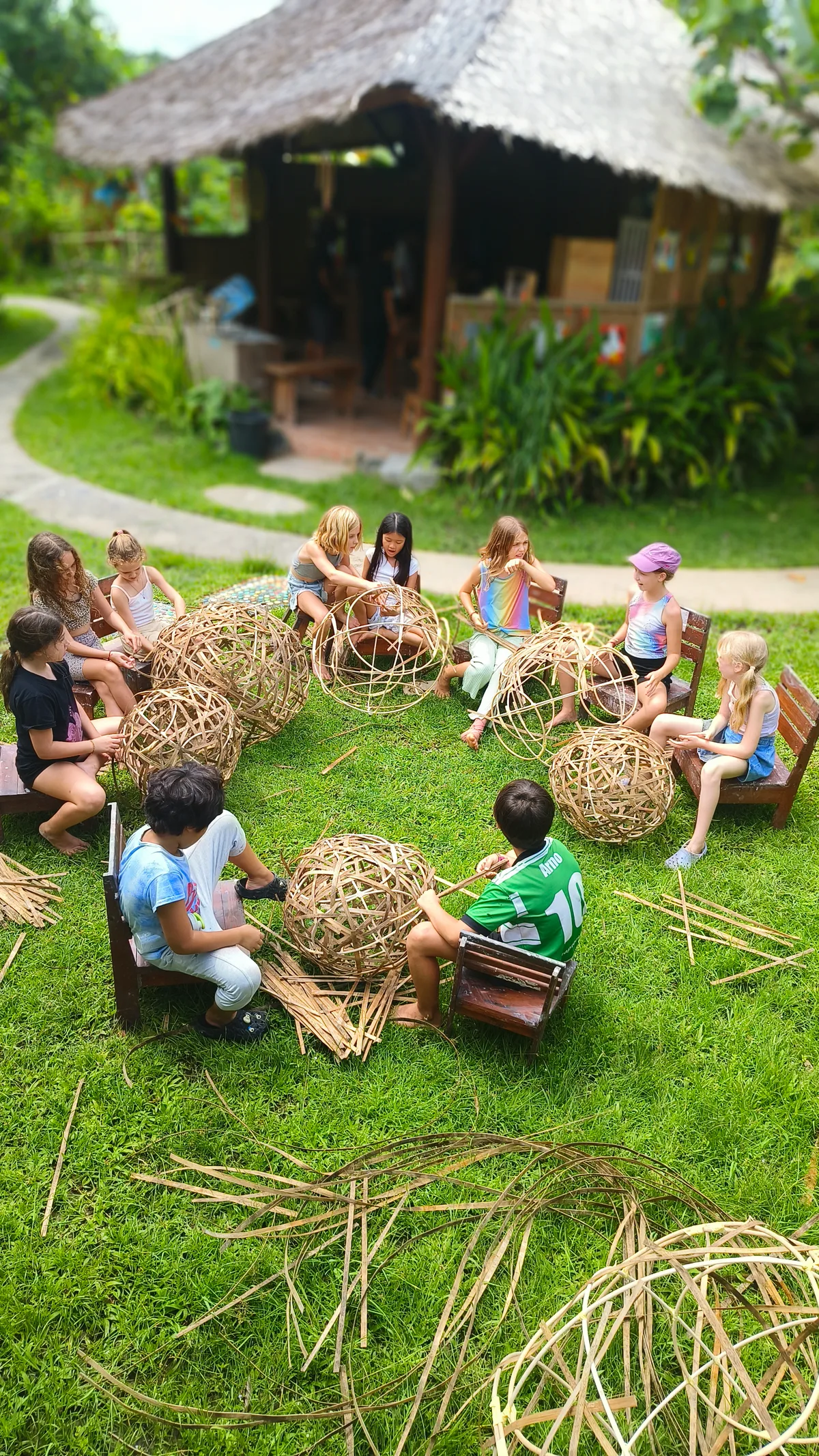
Students test the strength of bamboo, design footbridges of 2 to 4 metres, then lash and pin them across the ravine on our campus.
Result: Bridges that are load tested, opened with a ceremony and left in daily use.
Bale bengong pavilion
CultureProjects
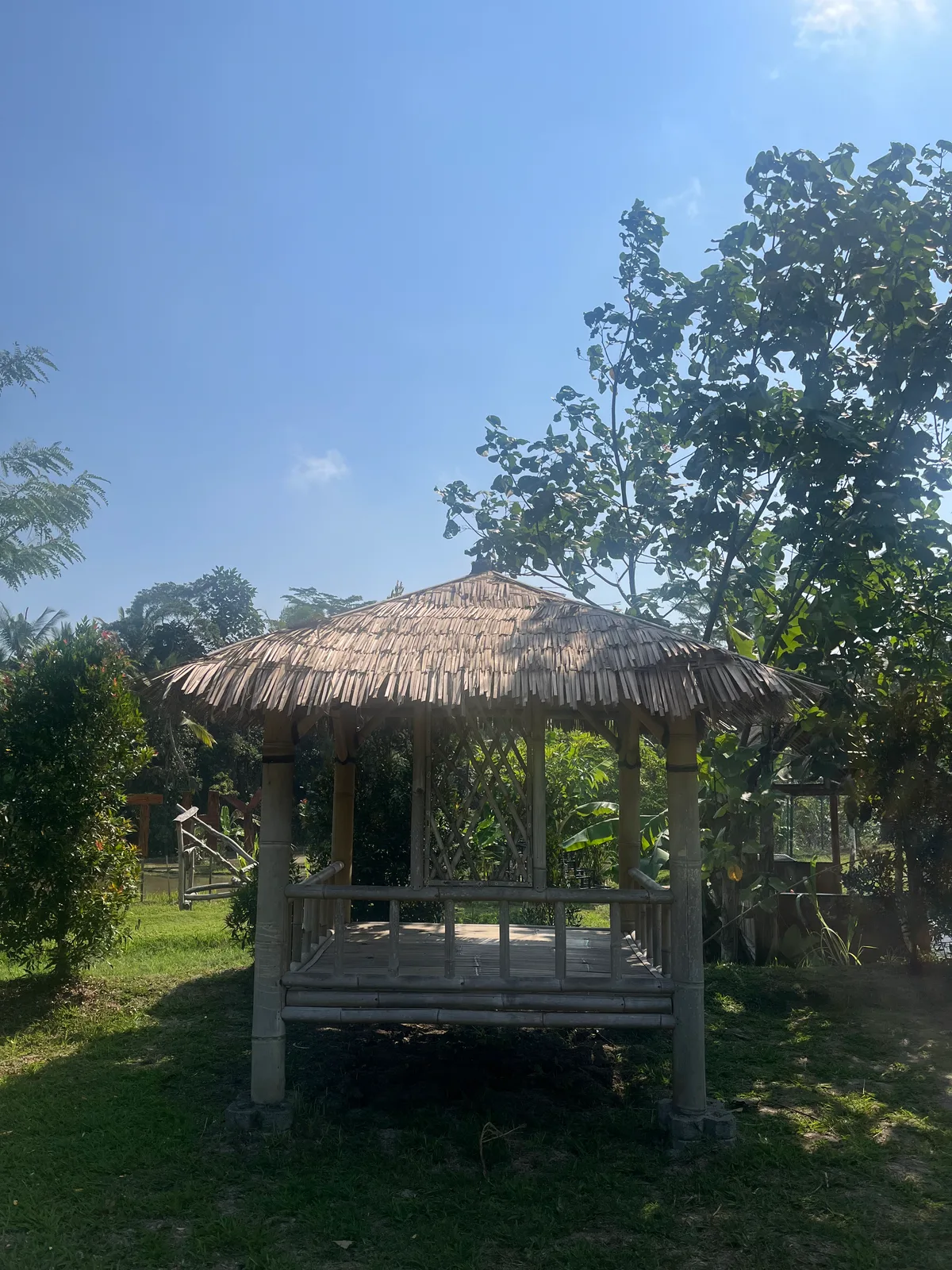
A small raised pavilion with a thatched roof, built to the proportions of Asta Kosala Kosali, the traditional Balinese rules of building. A ceremony marks the start of the build and another marks its completion.
Result: A permanent pavilion on campus that becomes the stage for the closing festival.
Village project
CultureProjectsTrips
At the start of the stay we ask the banjar, the village council, what it needs, such as a shelter on the path through the rice fields or a bench. A student crew designs and builds it.
Result: A structure the village uses, formally handed over.
Craft specialism
CultureProjects
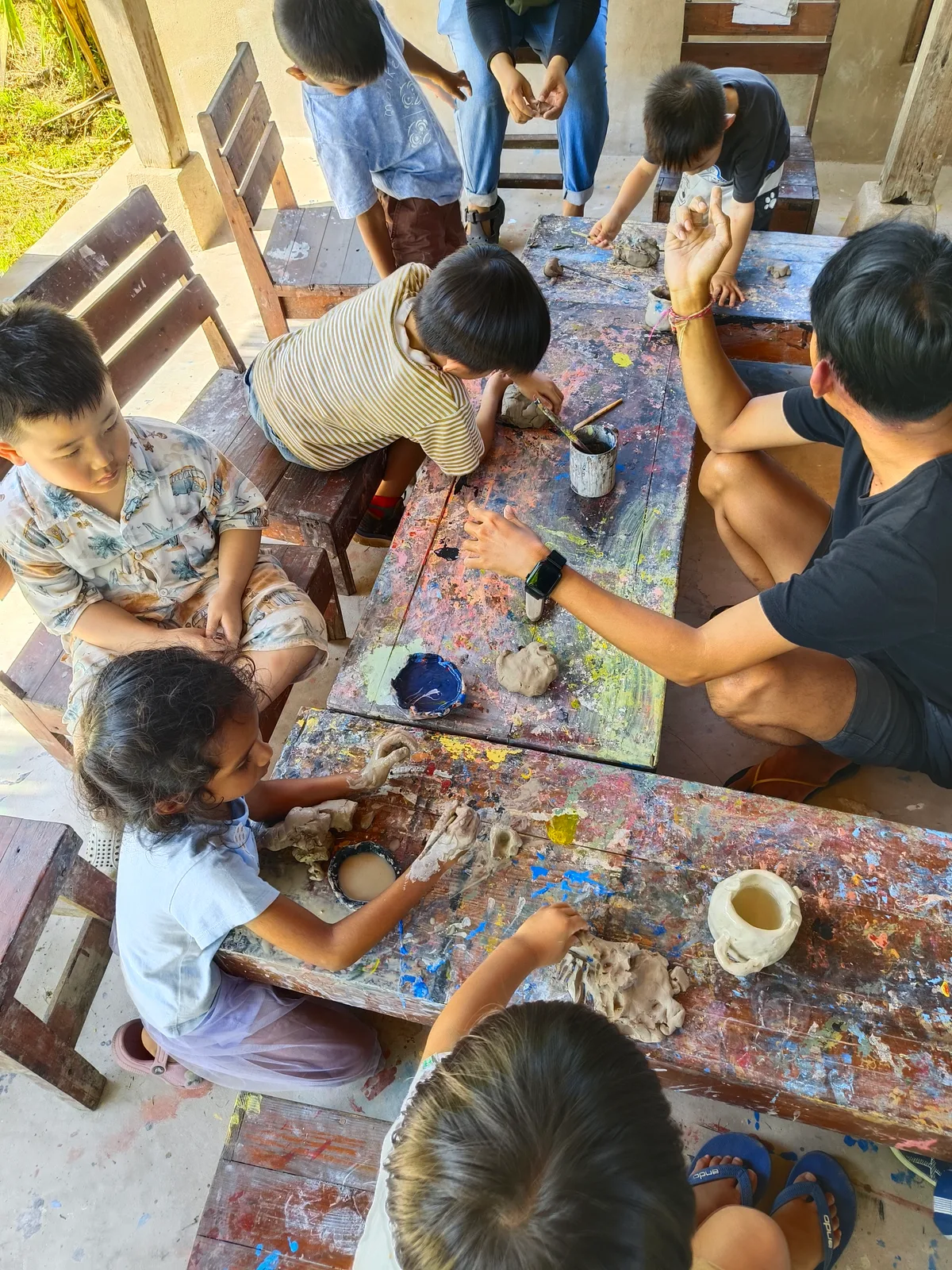
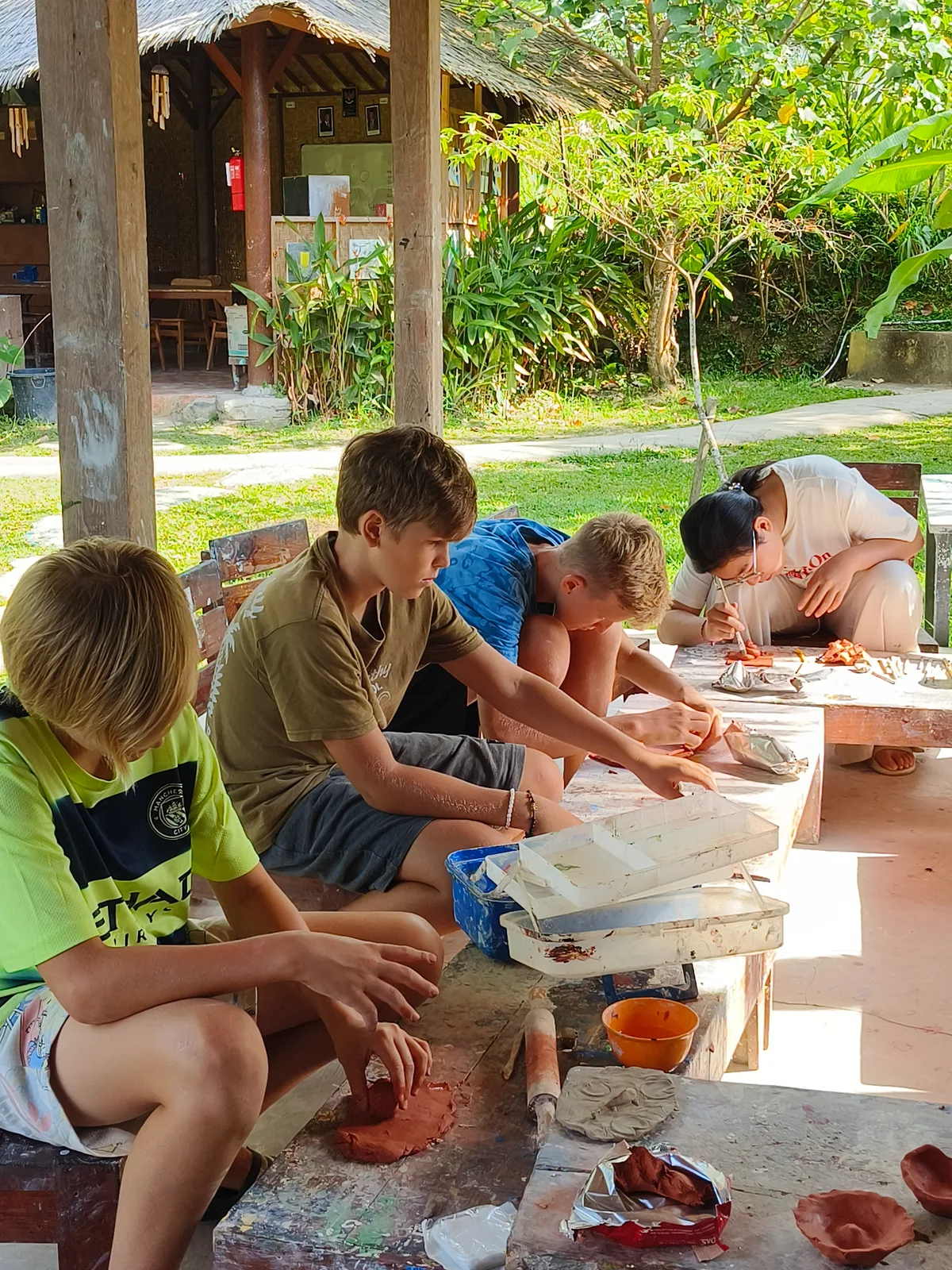
Students try every craft in the first weeks, then choose one to work on all term: wood carving, ceramics, mask carving, painting or janur, the Balinese art of weaving young coconut leaves.
Result: One finished piece each, with a photo story of how it was made.
Kite team
CultureNature and scienceProjects
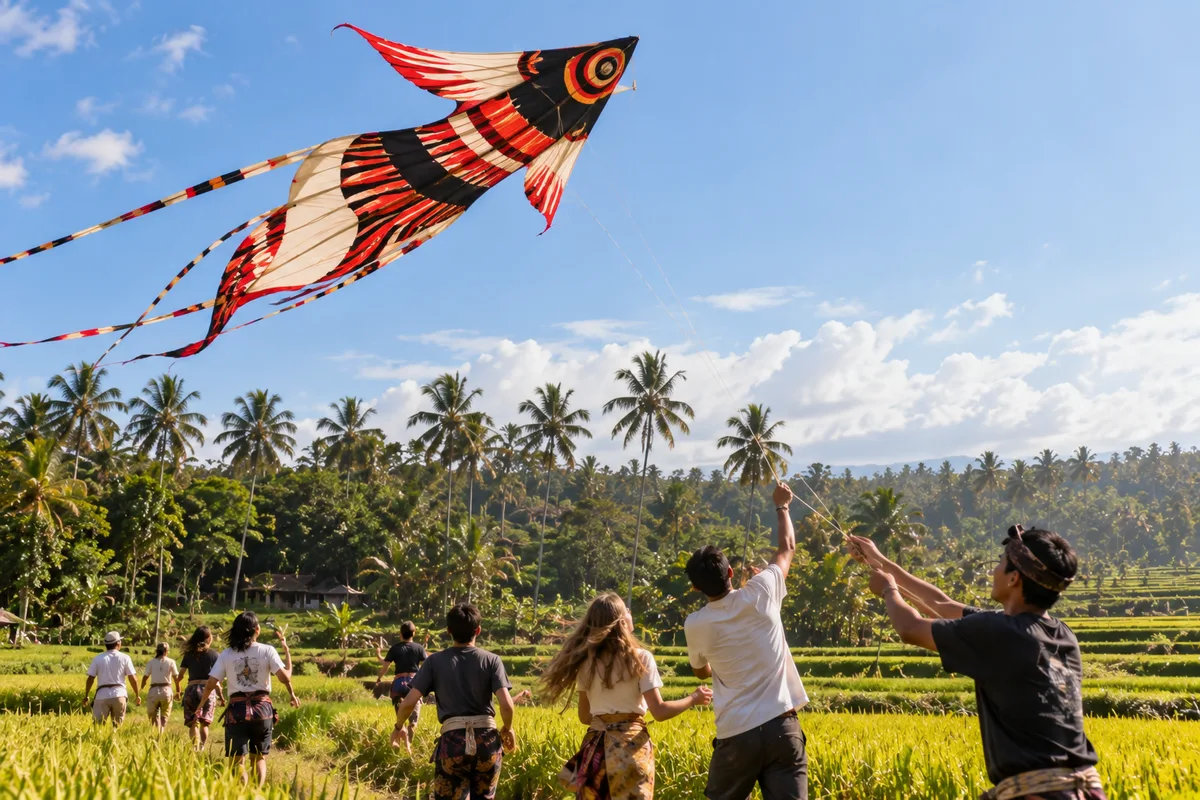
The group builds a bebean, a traditional Balinese fish kite of 3 to 4 metres, and flies it over the rice fields when the dry season winds arrive.
Result: A public flight, then the kite is given to the village.
Science field station
Nature and scienceProjects
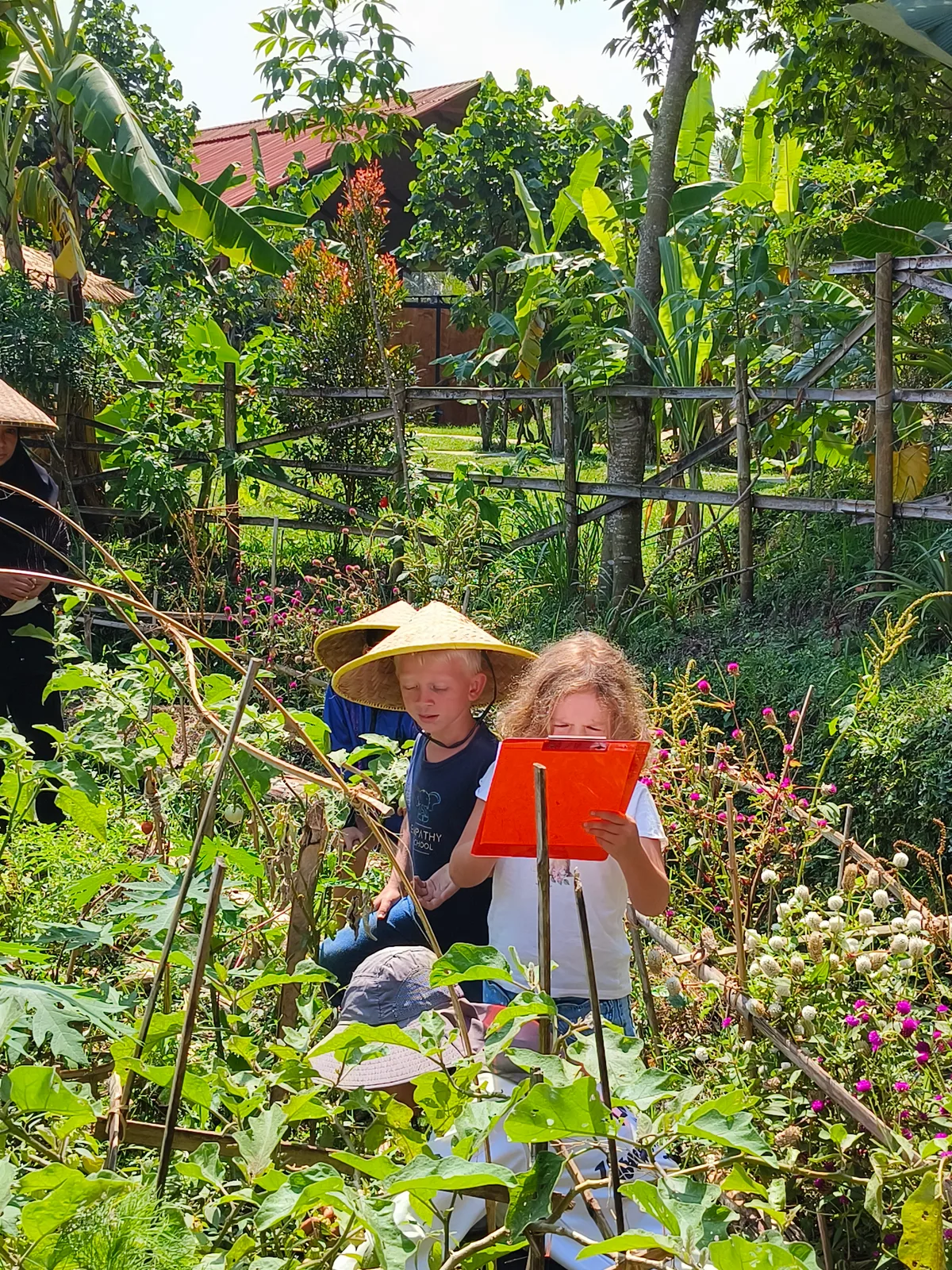
Daily rain gauge readings, weekly stream tests, and a river health survey of the ravine scored with Biotilik, an Indonesian method that reads water quality from the insects living in it.
Result: A full term of field data, presented at the closing festival.
Field guide in three languages
Nature and scienceProjects
Students write up the herbs of the campus garden and the birds of the rice fields in English, Indonesian and their own language.
Result: A printed booklet and QR signs in the garden.
Village documentary
CultureProjects
A student crew follows one part of village life across the term and interviews people in Bahasa Indonesia.
Result: A 15 minute film shown at the closing festival.
Waste and the ravine
Nature and scienceProjects
A waste audit with the village waste bank, composting on campus and bamboo sorting stations, ending with a clean up of the ravine.
Result: A cleaner ravine and sorting stations the school keeps using.
Two festivals, one mask
CultureProjects
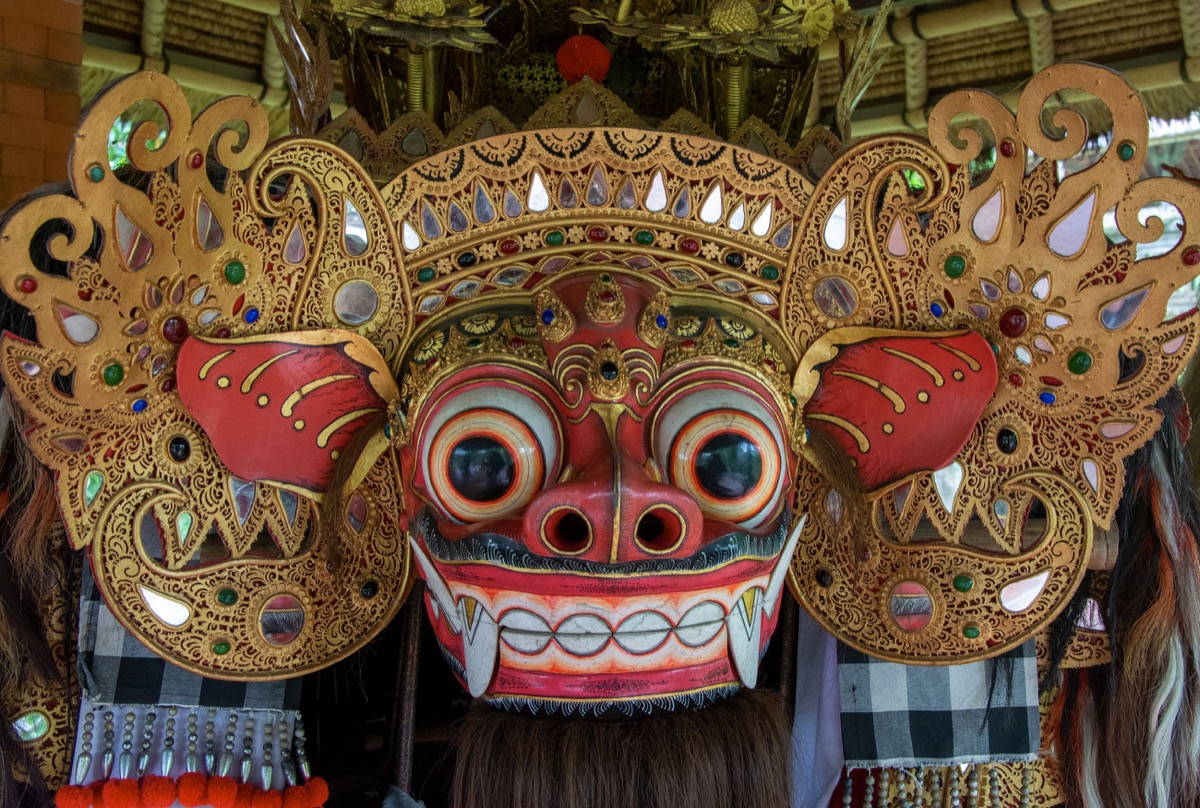
Students compare a festival from their own country with ogoh ogoh, then carve a festival mask using Balinese techniques.
Result: A written paper in their own language, exhibition panels and a small masked parade at the closing festival.
Closing festival
CultureProjects
A student committee plans the closing festival for the whole school.
Result: Kecak, gamelan, dance, the film and an exhibition of everything the group made.
Balinese arts
Gamelan
Culture
Our gamelan seats 8 or 9 players at a time. Everyone tries it in the first weeks. Students who choose it learn a baleganjur processional piece and a ceremonial piece.
Result: Performances at the closing festival, and at a temple festival if the village invites the group.
Balinese dance
Culture
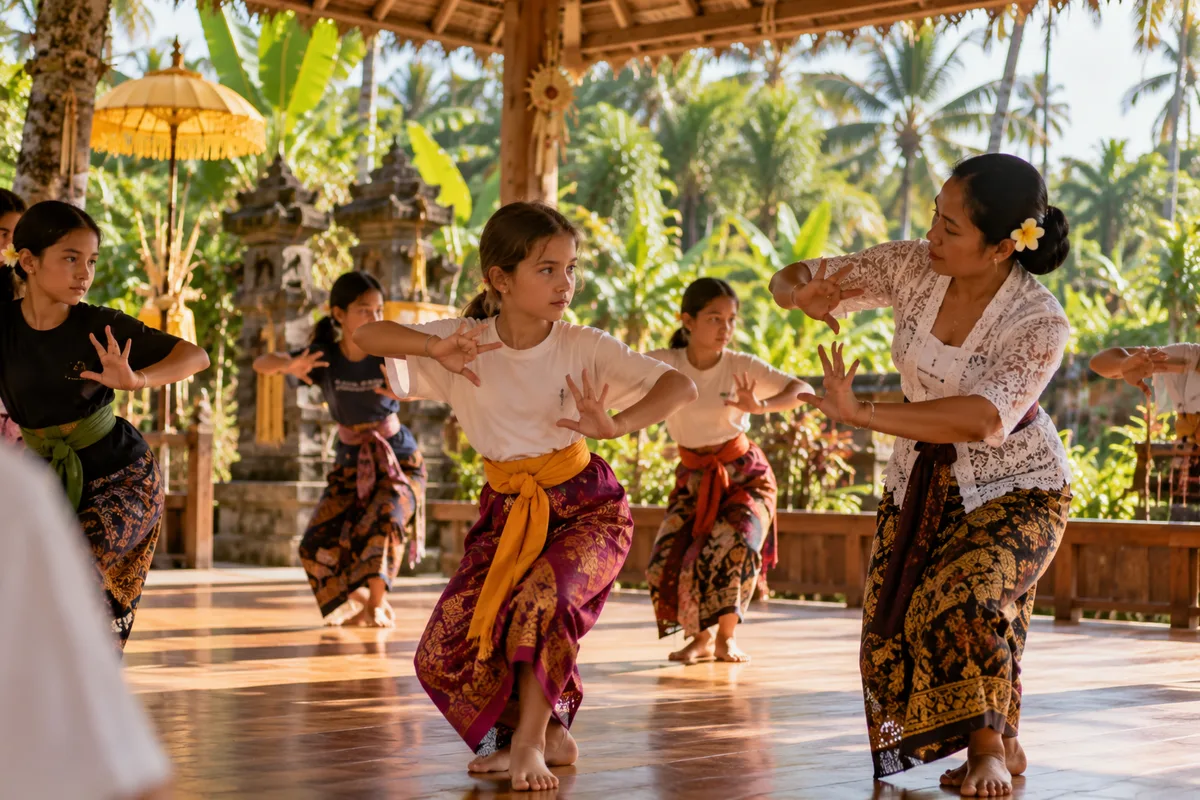
Students who choose dance learn a Balinese dance and rehearse it each week with the gamelan players.
Result: A performance with live gamelan at the closing festival.
Wayang kulit shadow puppets
CultureProjects
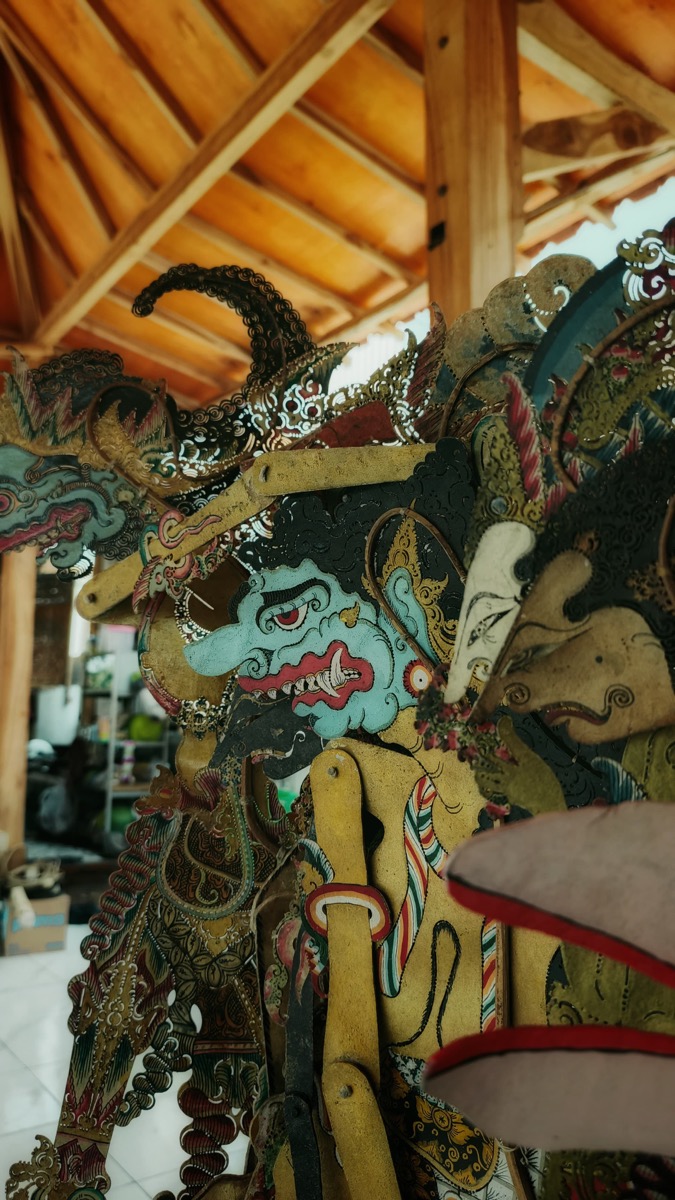
The wayang group makes its own puppets and writes a short show that joins a legend from home with a Balinese story, played by oil lamp with gamelan.
Result: A first showing on the camping night and a wayang night for families.
Kecak
Culture
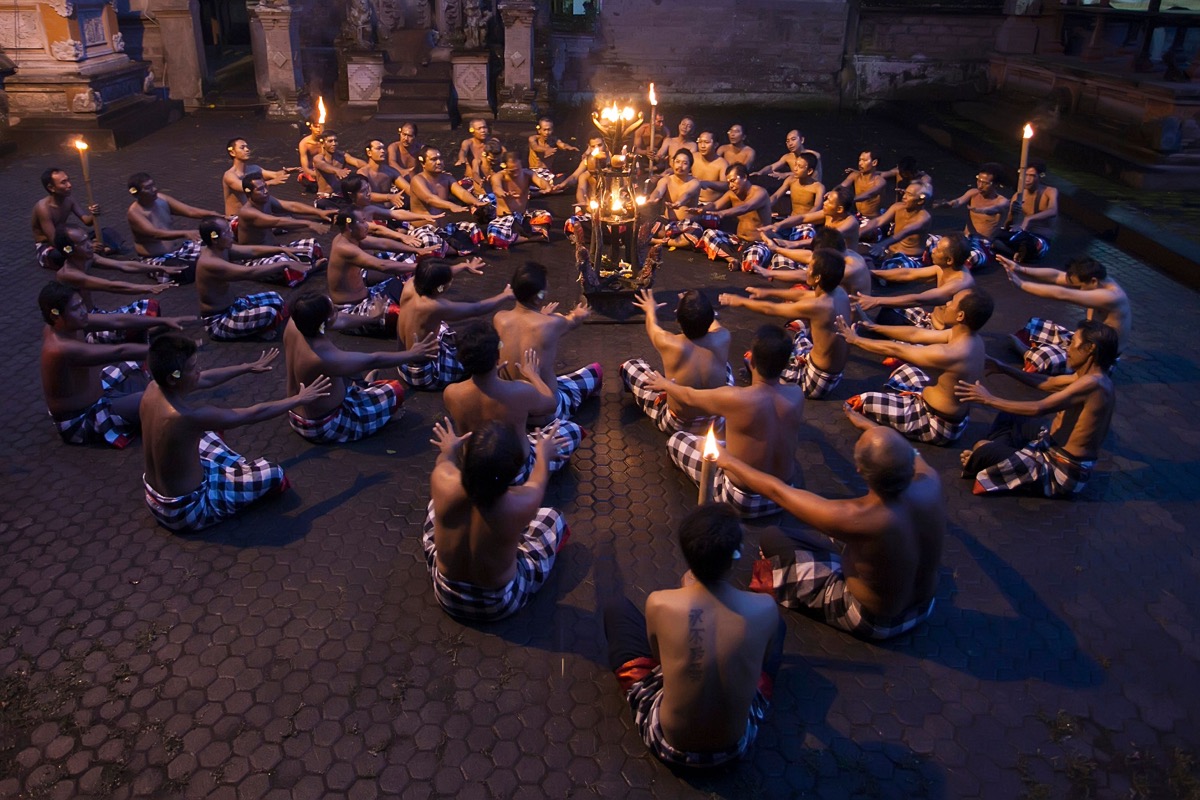
The whole group learns kecak, the Balinese chant performed by a large circle of voices with no instruments.
Result: A kecak that opens the closing festival.
Bamboo music
CultureProjects
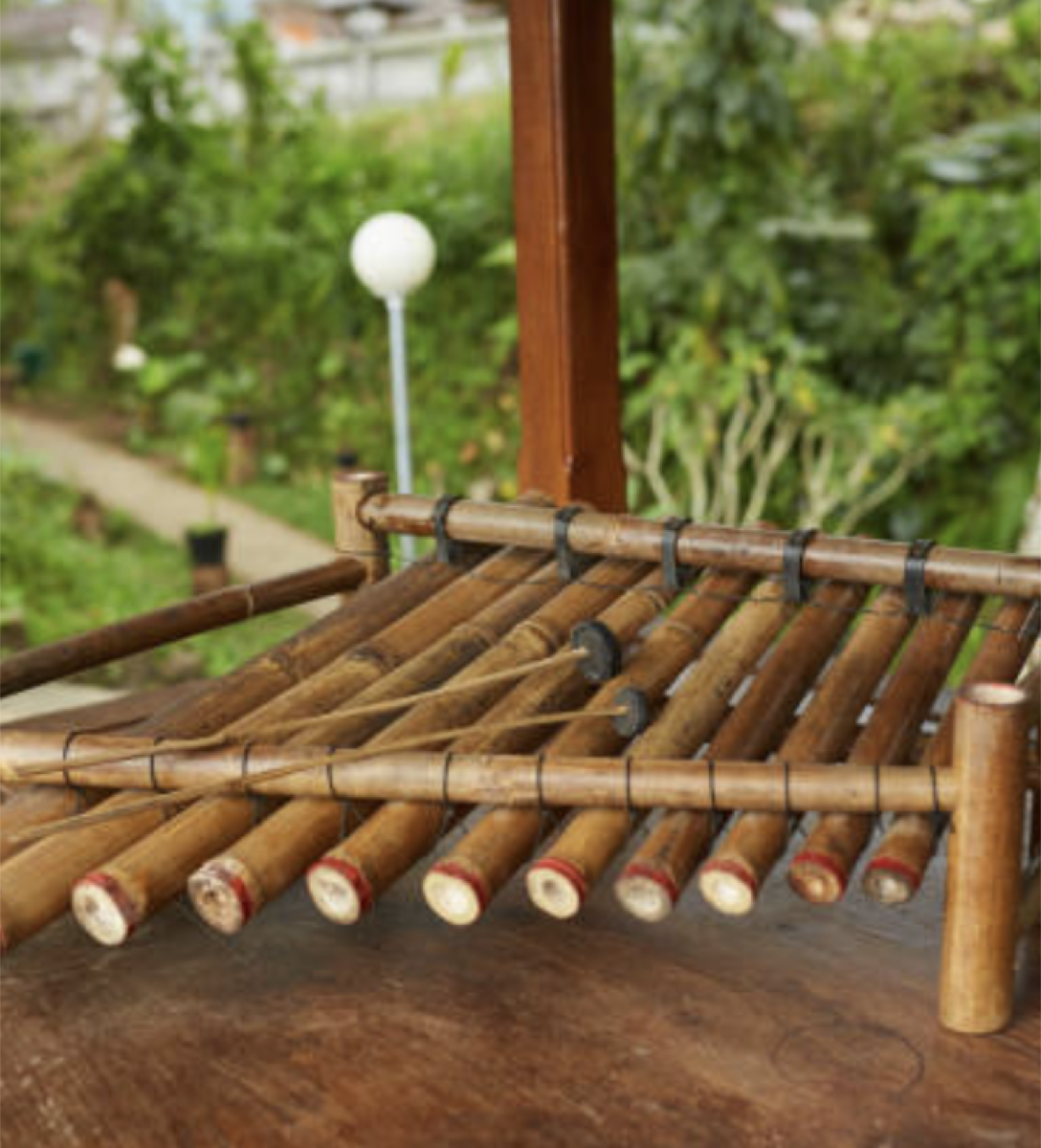
Students cut and tune a tingklik, the Balinese bamboo xylophone, and a kulkul, the slit drum that calls the village together.
Result: Instruments the group keeps playing.
Trips and short units
Temple etiquette and Balinese society
Culture
On the first day, students learn temple dress and etiquette, then how Balinese society is organised: Tri Hita Karana, the banjar, the subak and the temple calendar.
Result: Students join their first ceremony knowing what to do.
Welcome ceremony
Culture
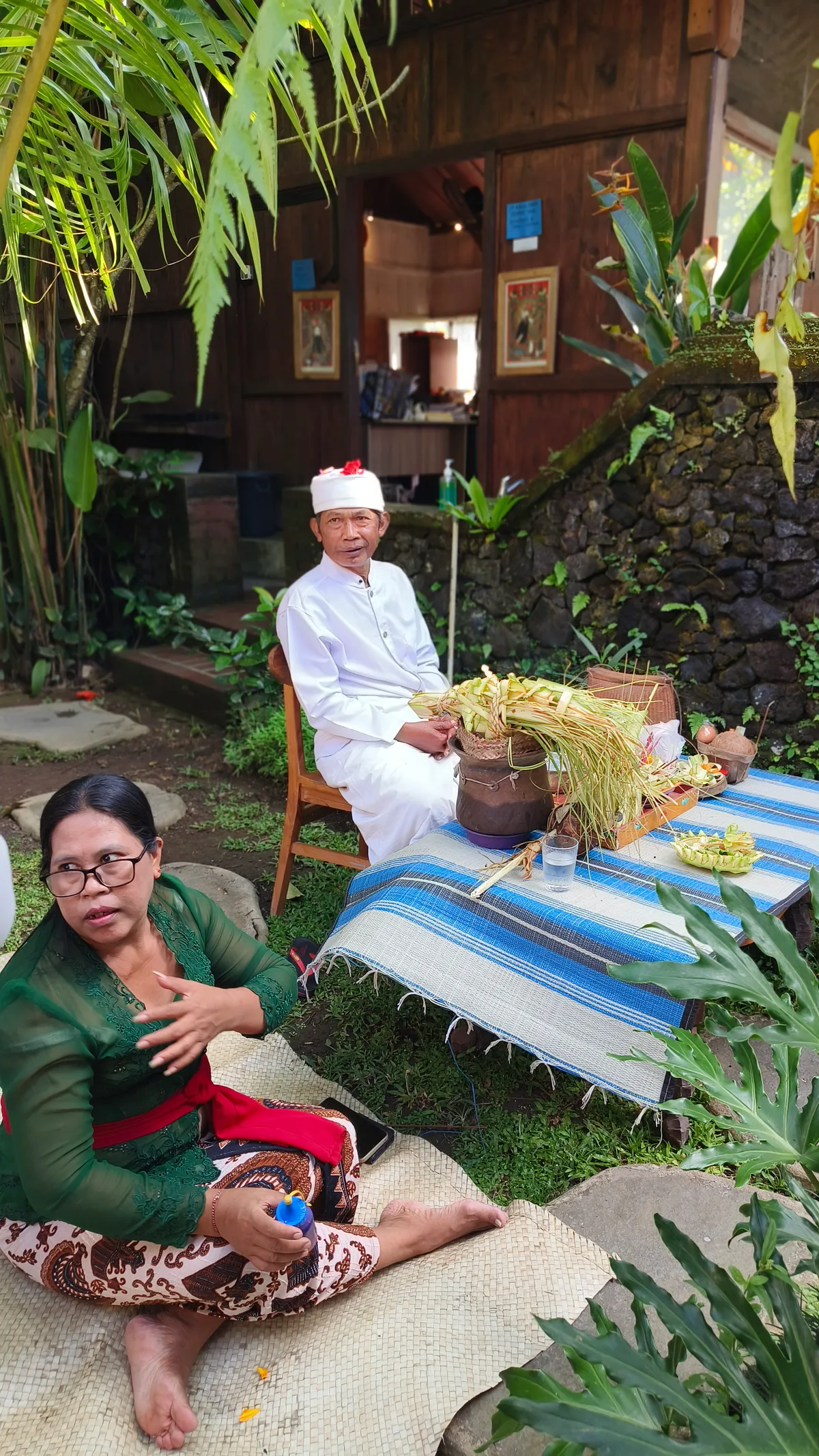
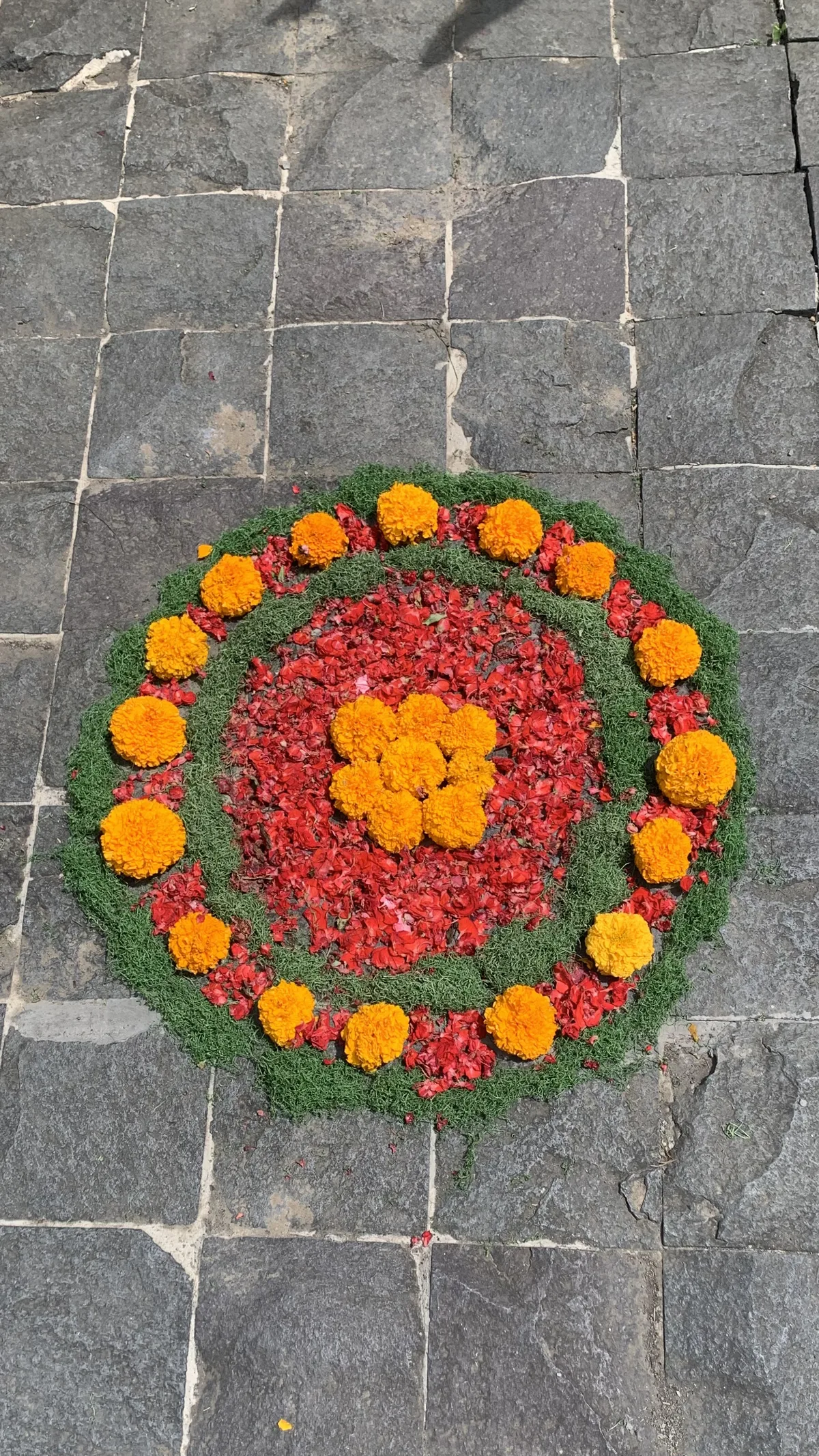
Students help prepare the offerings, then take part in a ceremony that welcomes the group to campus.
Result: The group starts the stay as part of the school community.
Rice week
CultureNature and scienceProjectsTrips
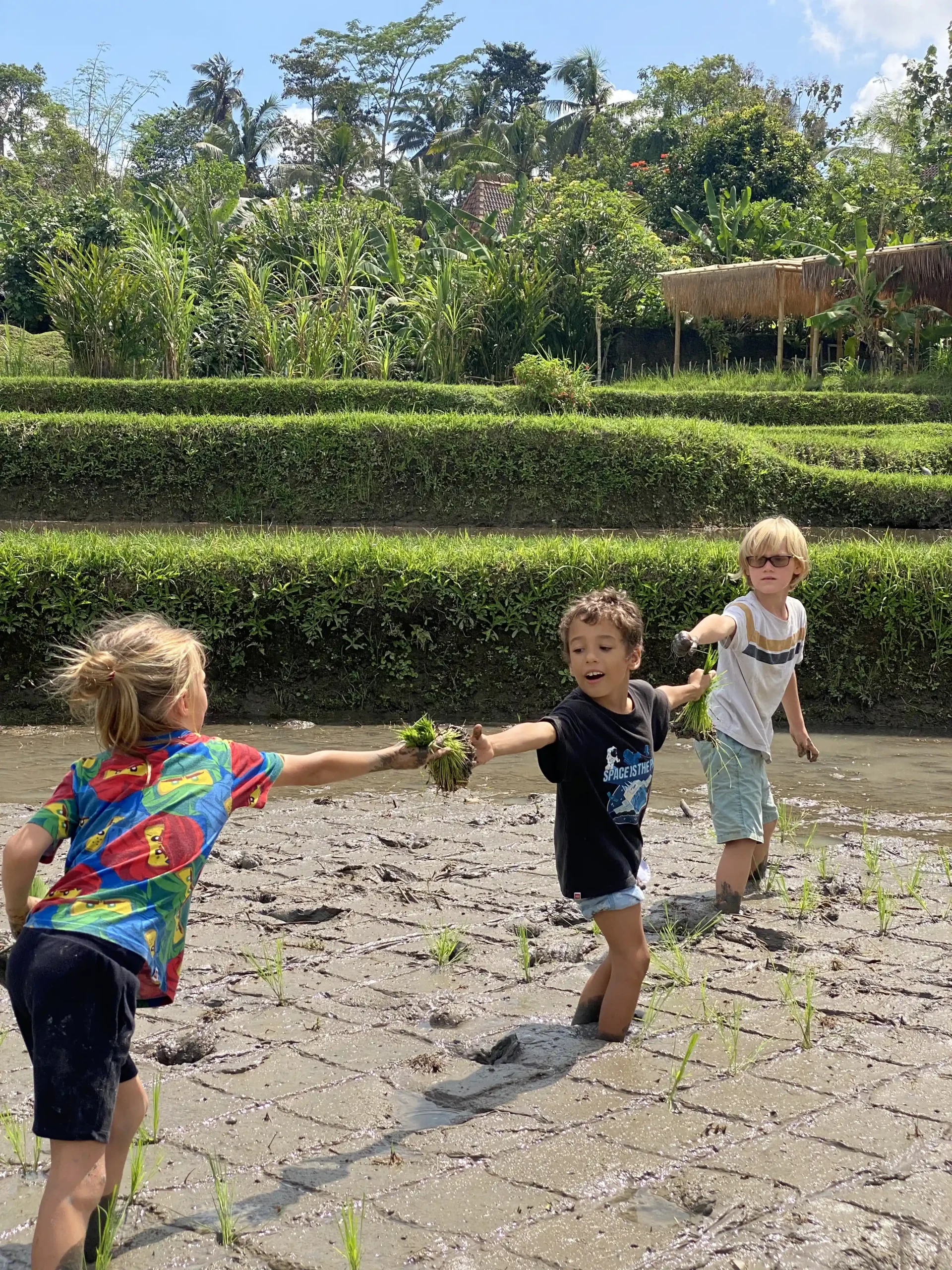
Five mornings in the paddies, a short walk from campus. Students plant, harvest and thresh rice, survey the fields with measured ropes, draw scaled maps and work out area and yield, then walk the subak to see how water is shared between fields. The subak irrigation system is a UNESCO World Heritage site.
Result: A bound map of the fields from their own measurements, and a painted copy for the village.
Pejeng heritage walk
CultureTrips
A walk through the old royal heart of Pejeng: Pura Penataran Sasih, home of the Moon of Pejeng, the largest single cast bronze kettle drum known; Pura Pusering Jagat; Pura Kebo Edan; and the stone sarcophagi at Museum Gedong Arca.
Result: Students learn that the ground under the campus was an early royal centre of Bali.
Shadowless day
Nature and scienceProjects
Twice a year, in late February and mid October, the sun passes directly over Bali at noon. Students measure shadows on the same day as a partner class back home and calculate the circumference of the Earth, as Eratosthenes did.
Result: A result worked out together with a class on the other side of the world.
Sugar cane rockets
Nature and scienceProjects
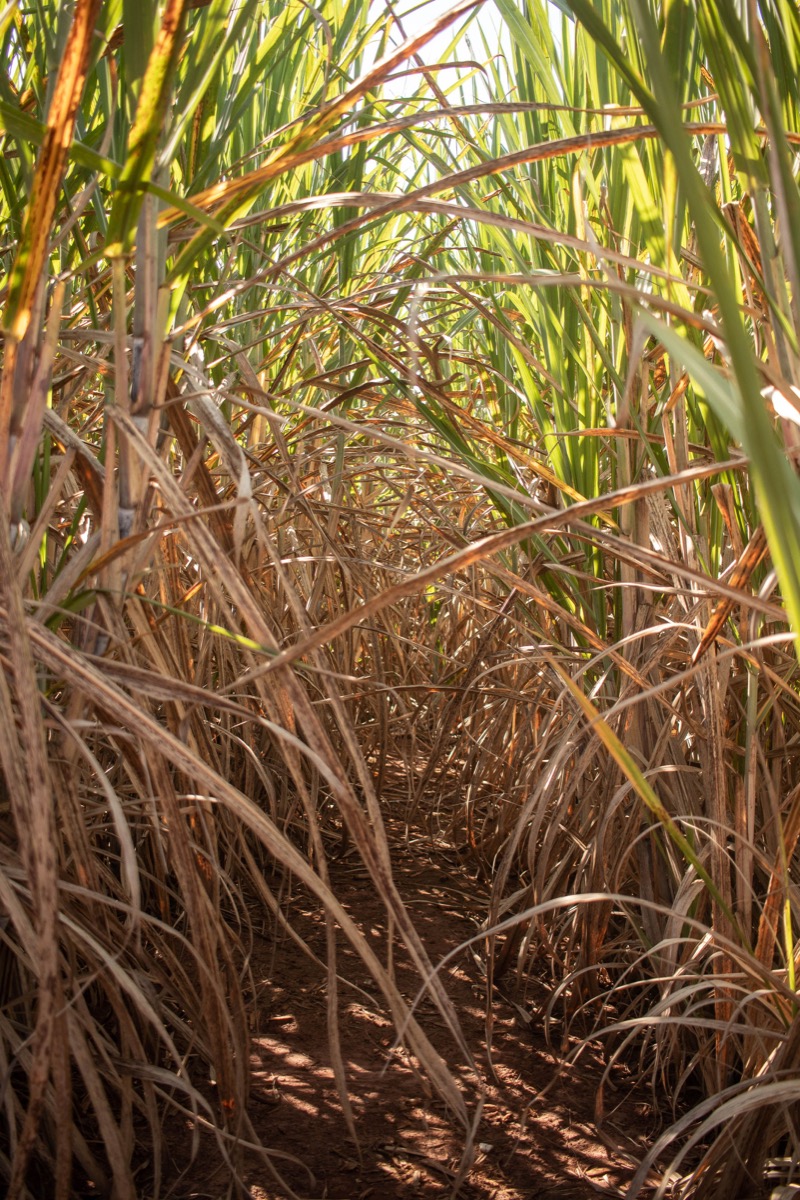
Students harvest sugar cane, press it and boil the juice down to sugar, then build and launch small rockets on the football field.
Result: A launch day, and the chemistry and physics of thrust for visiting science teachers to build on.
Water temples of the Pakerisan valley
CultureNature and scienceTrips
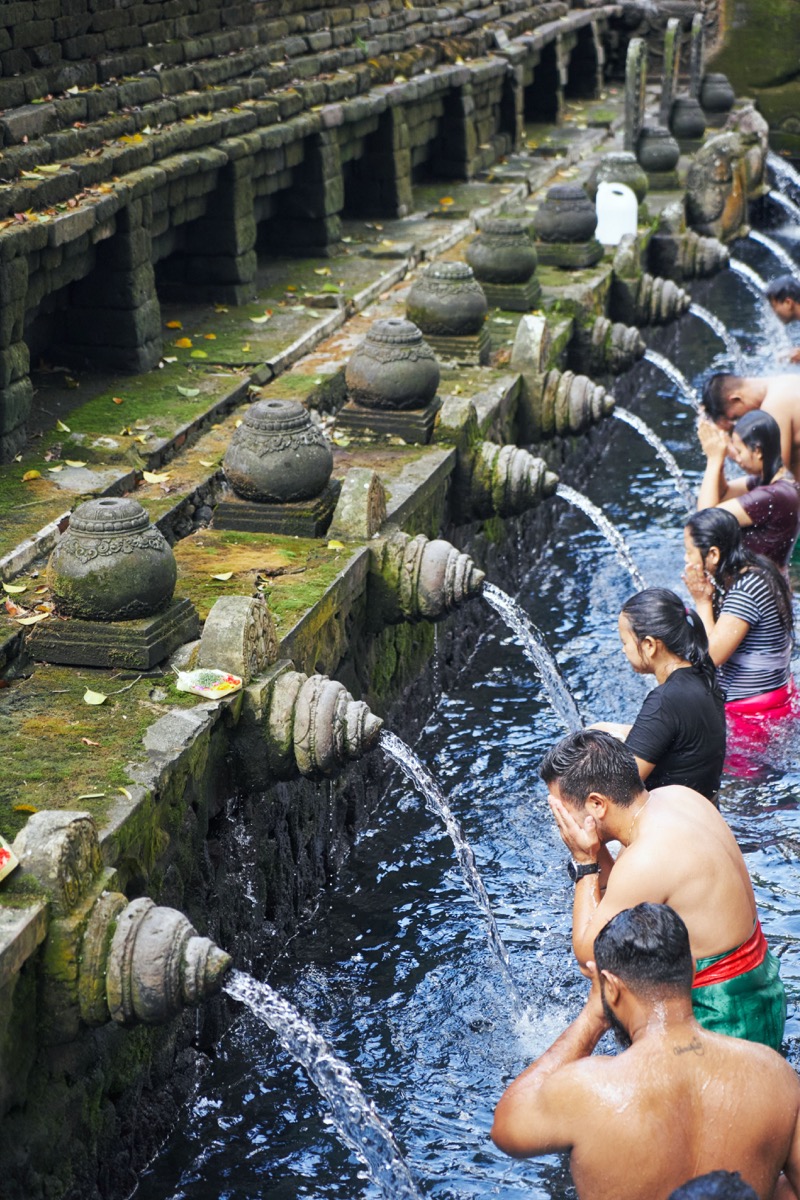
The spring fed pools of Tirta Empul, where Balinese come for melukat, a water purification ritual; the rock cut shrines of Gunung Kawi; Pura Mengening; and Subak Pulagan. All are part of the UNESCO listed Pakerisan watershed, 15 to 20 minutes from campus.
Result: Students trace the water in their rice fields back to its source.
Painting day in Ubud and Batuan
CultureTrips
One museum, Puri Lukisan, ARMA or Neka, then painters at work in the village of Batuan.
Result: Students recognise the main styles of Balinese painting.
Aksara Bali and lontar
Culture
Students learn the Balinese script and write their names on palm leaf, etched with a knife and darkened with candlenut soot.
Result: A lontar leaf each, written by hand.
Stream flow and micro hydro
Nature and scienceProjects
Students measure water flow in the ravine and the rice field channels, then build a small model turbine sized from their own figures.
Result: A working model and a data set for the science teachers.
Coconut oil and Balinese cooking
CultureNature and science
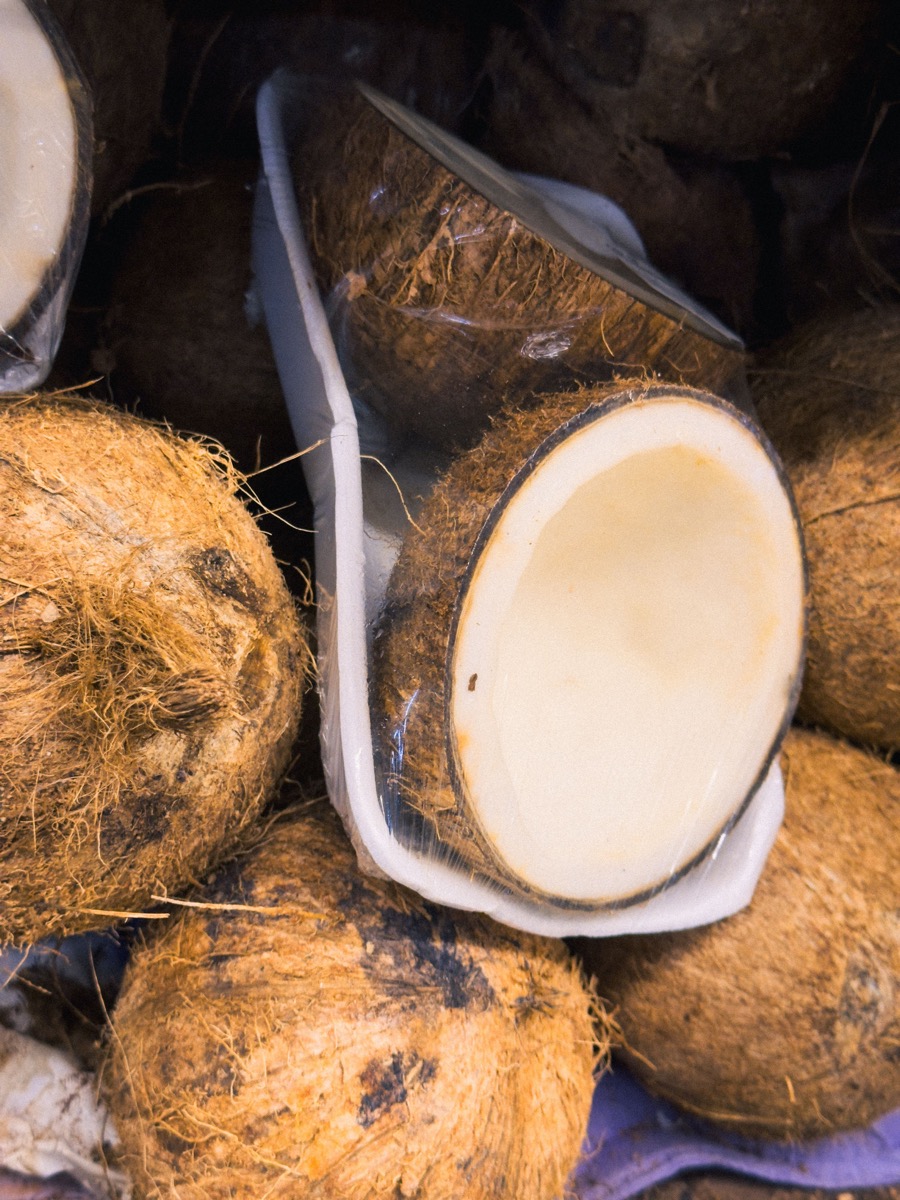
Students make coconut oil the traditional way, from grating the coconut to cooking it down, then use it to cook base genep, the Balinese spice paste, and sate lilit.
Result: A bottle of oil each and a meal they cooked.
Goa Gajah and Yeh Pulu
CultureTrips
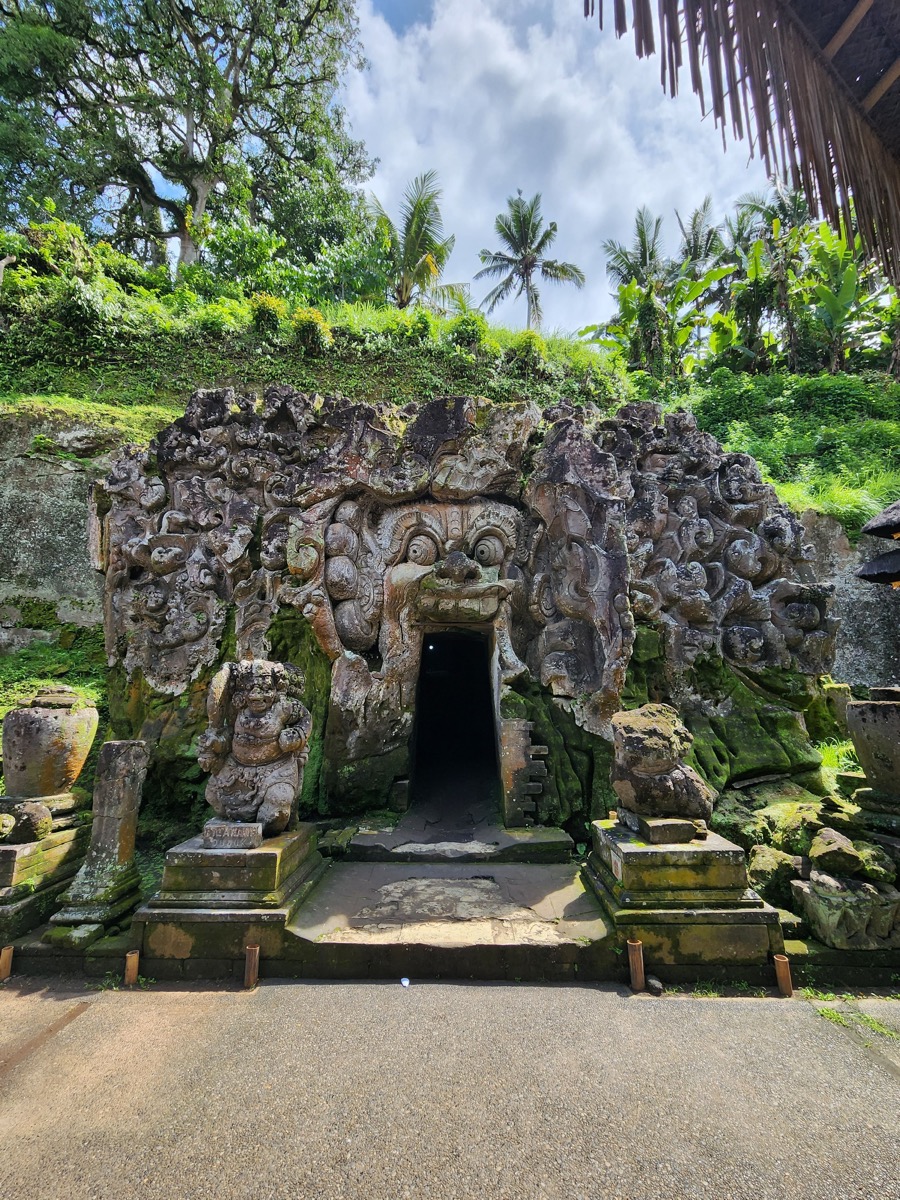
The Elephant Cave temple and its bathing pools, then the carved rock reliefs of Yeh Pulu in the rice fields of Bedulu.
Result: Two more ancient sites on the students' map of Pejeng and Bedulu.
Mount Batur overnight
CultureNature and scienceTrips
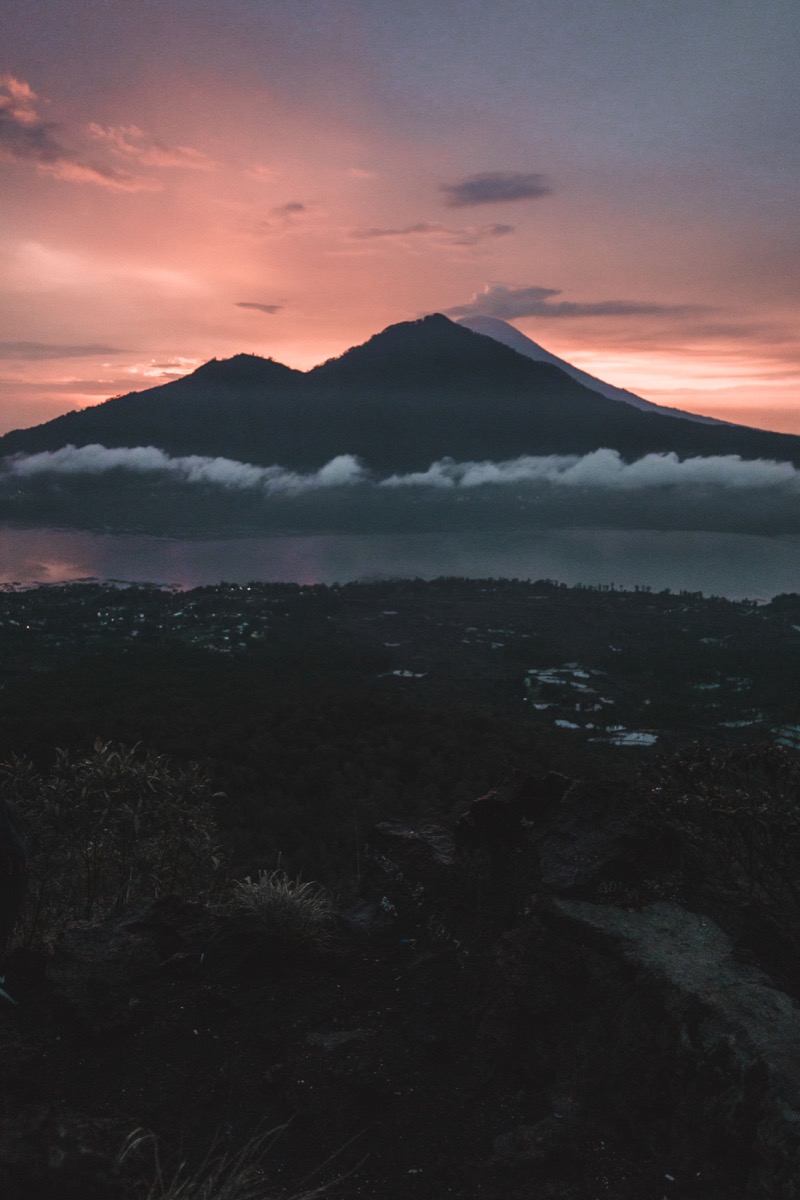
Day one: the Batur Geopark Museum, Pura Ulun Danu Batur and the hot springs, then a night by the lake. Day two: a sunrise trek past lava flows of known age. Batur is a UNESCO Global Geopark, about an hour from campus.
Result: Students explain the volcano both as geology and as the source of the island's water.
Camping night
CultureNature and scienceProjects
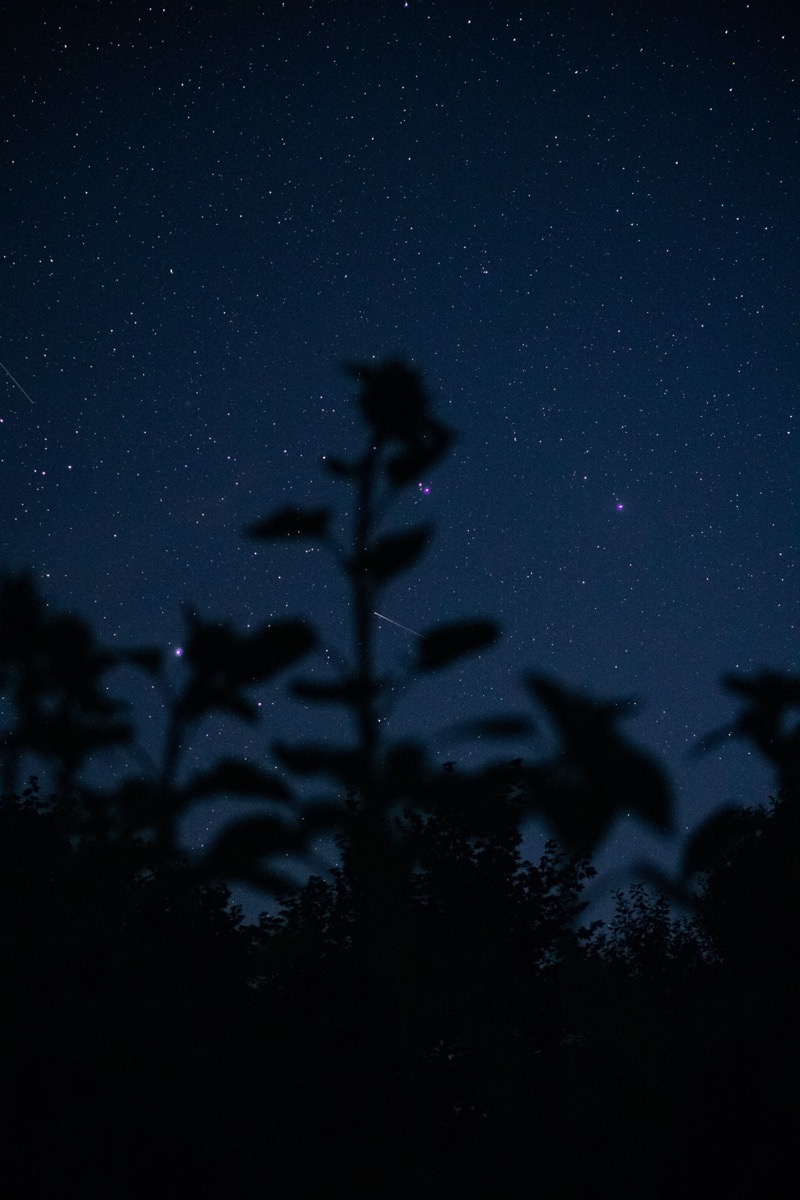
The group camps on campus under a new moon: an evening offering, a night walk counting frogs and fireflies along the paddy banks, the stars of the southern sky, and a first wayang showing by oil lamp.
Result: Frog and firefly counts, a star map and the first wayang performance.
Tenganan Pegringsingan
CultureTrips
A Bali Aga village that kept older ways, known for geringsing double ikat weaving and for artisans who etch pictures on lontar.
Result: Students see a Balinese village that follows its own older customs.
Klungkung
CultureTrips
The painters of Kamasan village and the painted ceilings of Kertha Gosa.
Result: Students read the classical wayang style of painting where it was made.
Penglipuran
CultureNature and scienceTrips
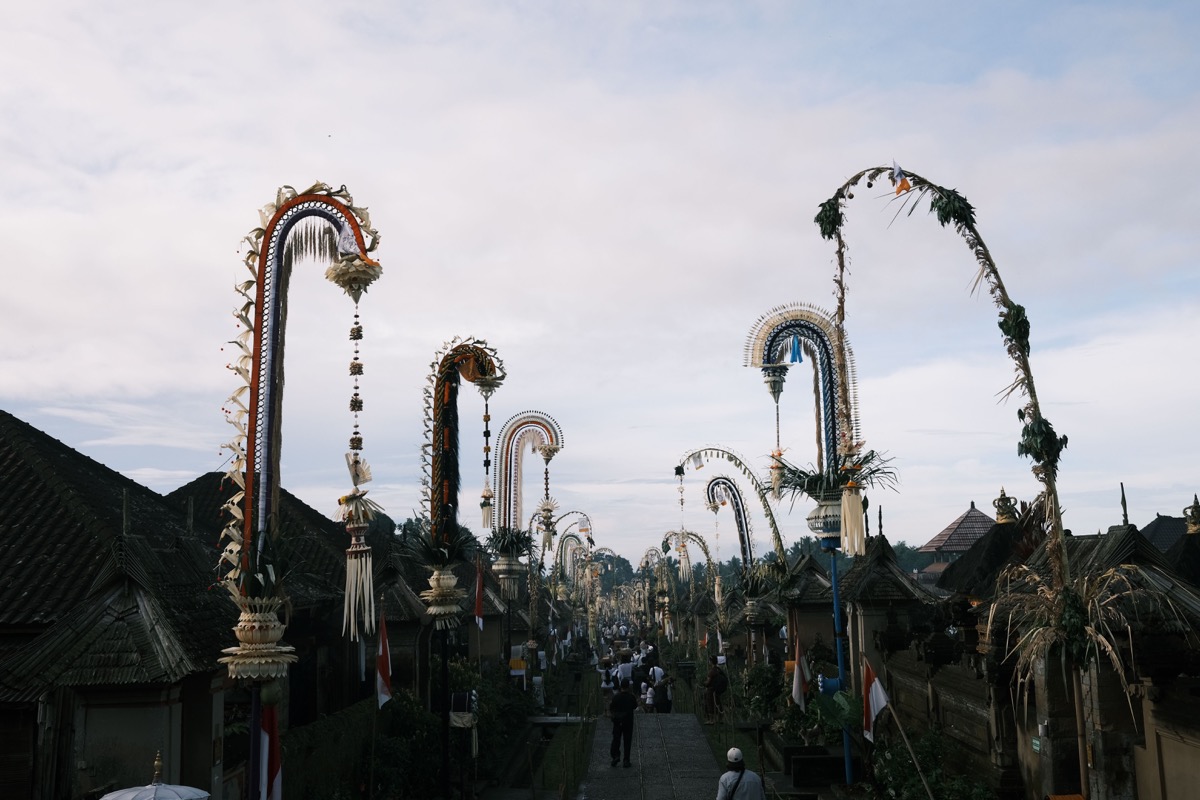
A traditional village laid out by the rules of Asta Kosala Kosali, and its bamboo forest.
Result: Students see at village scale the building rules behind their own pavilion.
Waterfall swim at Tibumana
Nature and scienceTrips
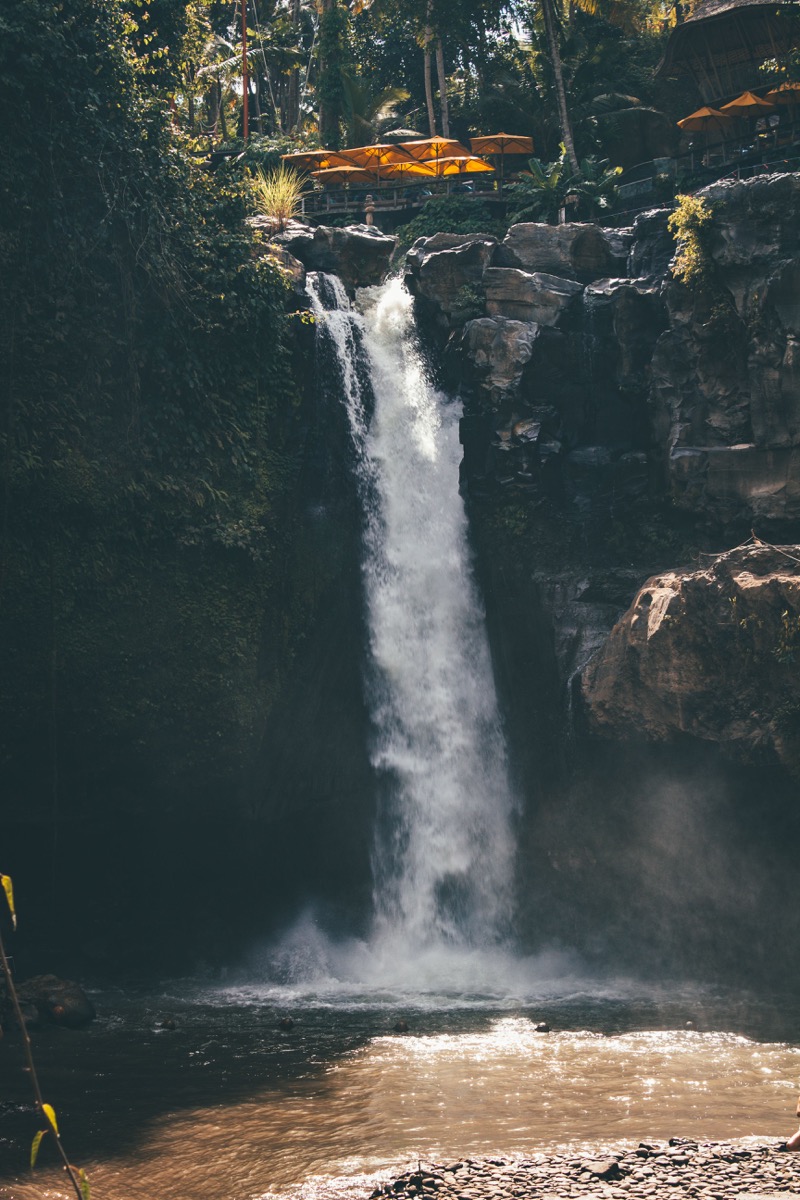
A morning swim at Tibumana waterfall.
Result: A cool break late in the term.
Megibung
Culture
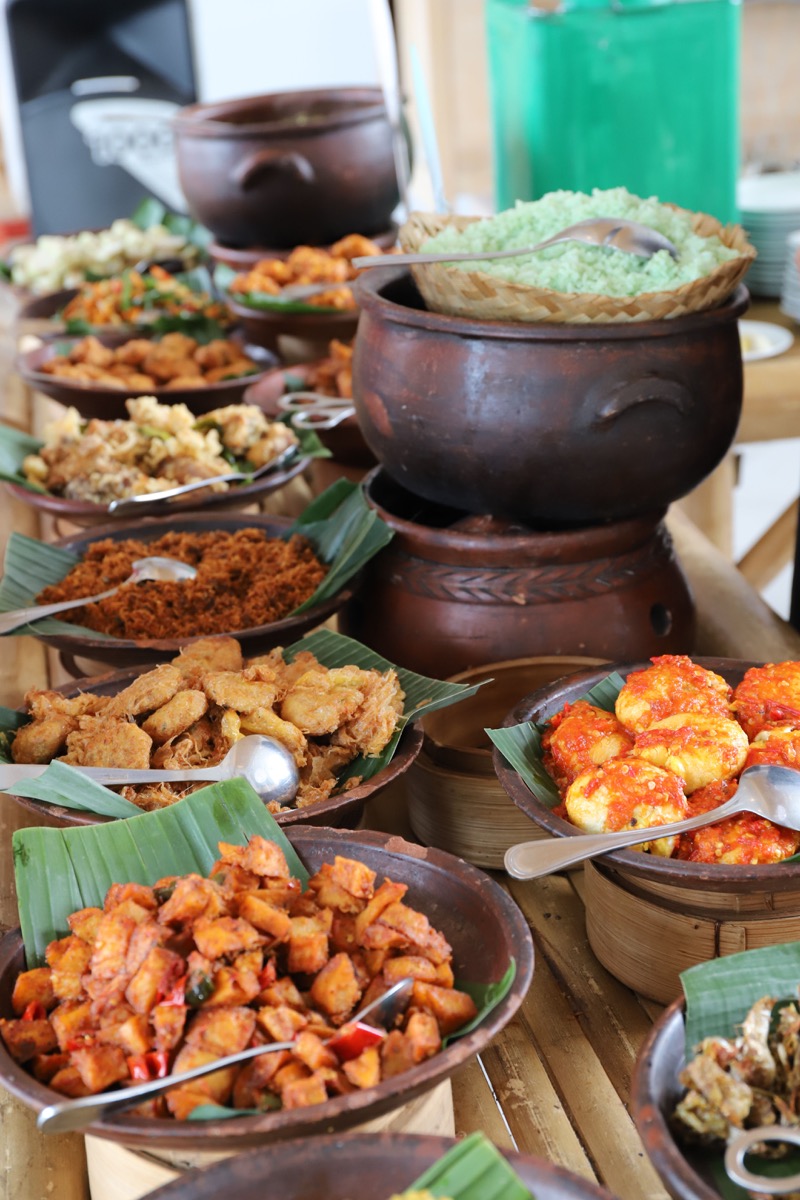
A Balinese communal meal, eaten sitting in circles from shared trays.
Result: A shared meal with the people they have worked beside.
Every day
Bahasa Indonesia
Culture
Every morning starts with a circle and half an hour of Bahasa Indonesia, so students can talk with the people they work beside.
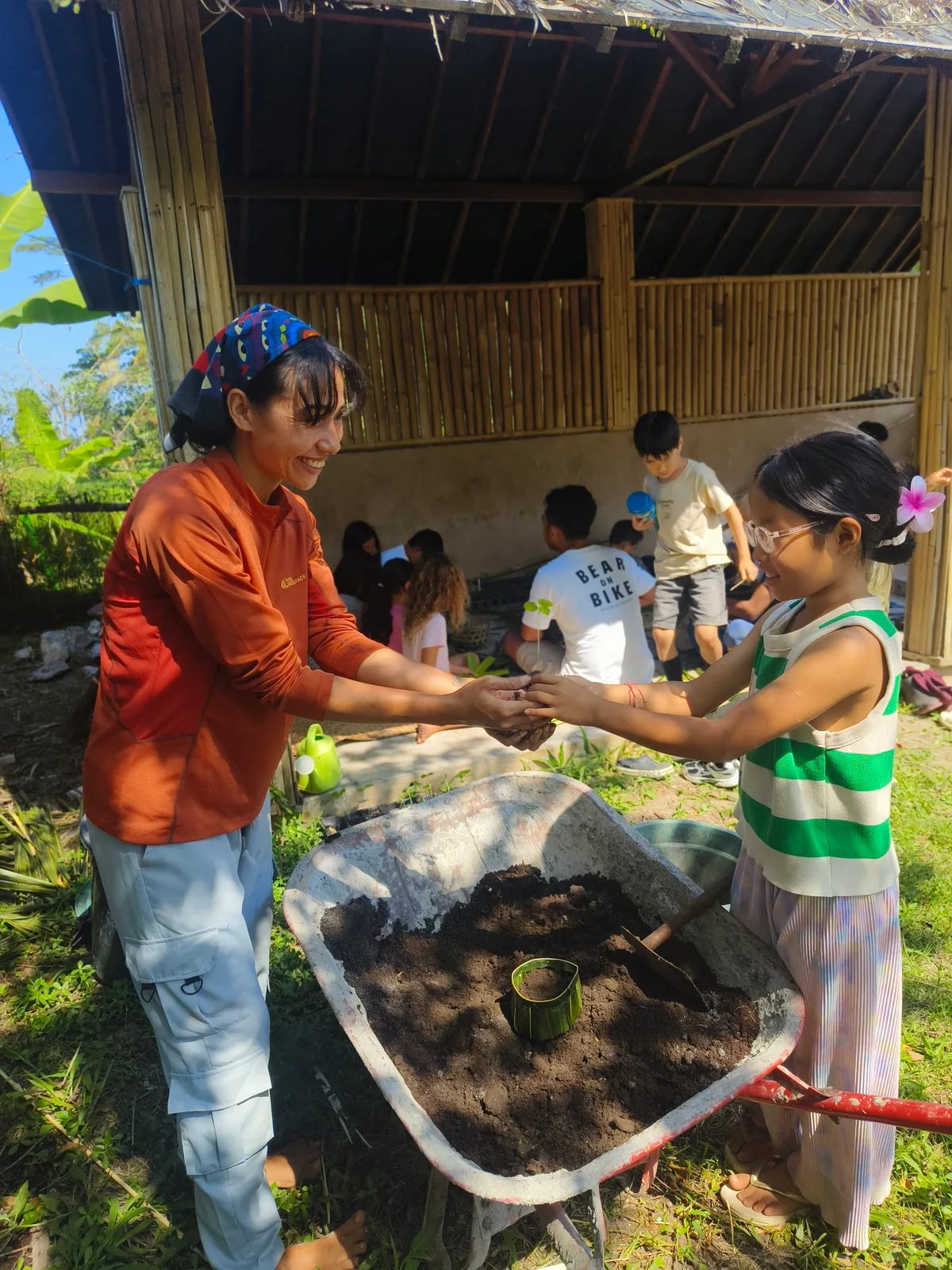
Herb garden
Nature and science
A short session in the campus herb garden every afternoon.
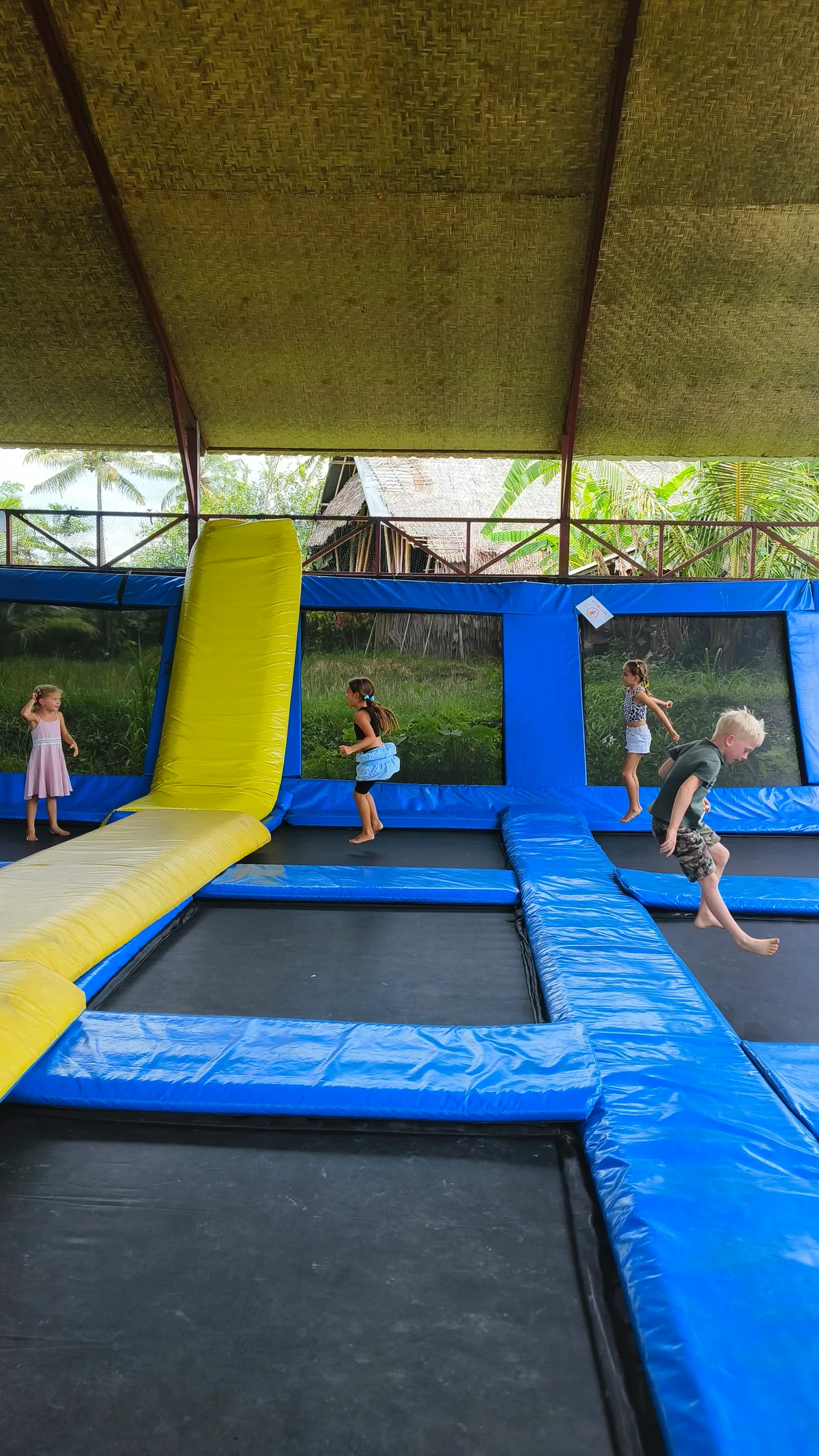
Trampoline and sport
Nature and science
Every afternoon ends with our trampoline park or sport: football, pencak silat and Balinese traditional games. On trip days the walk or the trek is the sport.
Ceremonies and the Balinese calendar
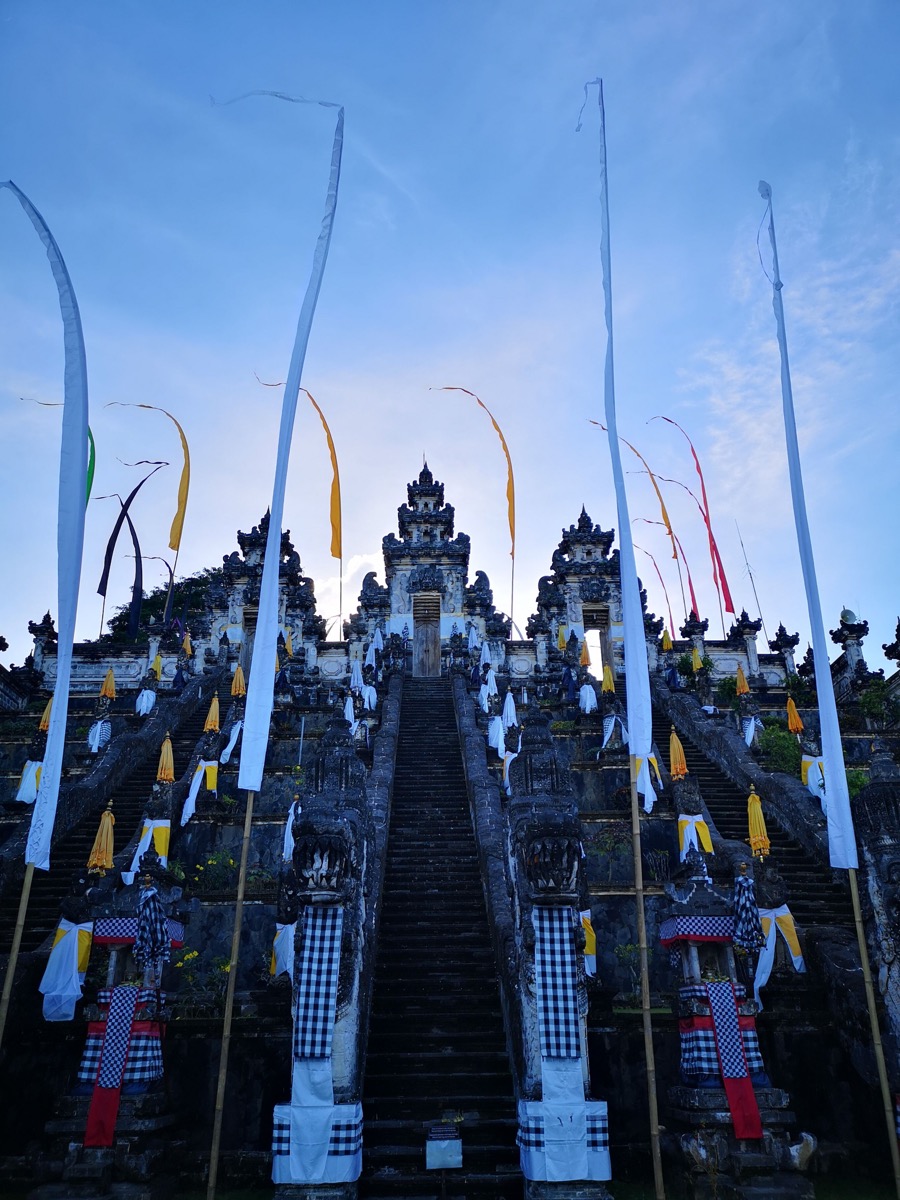
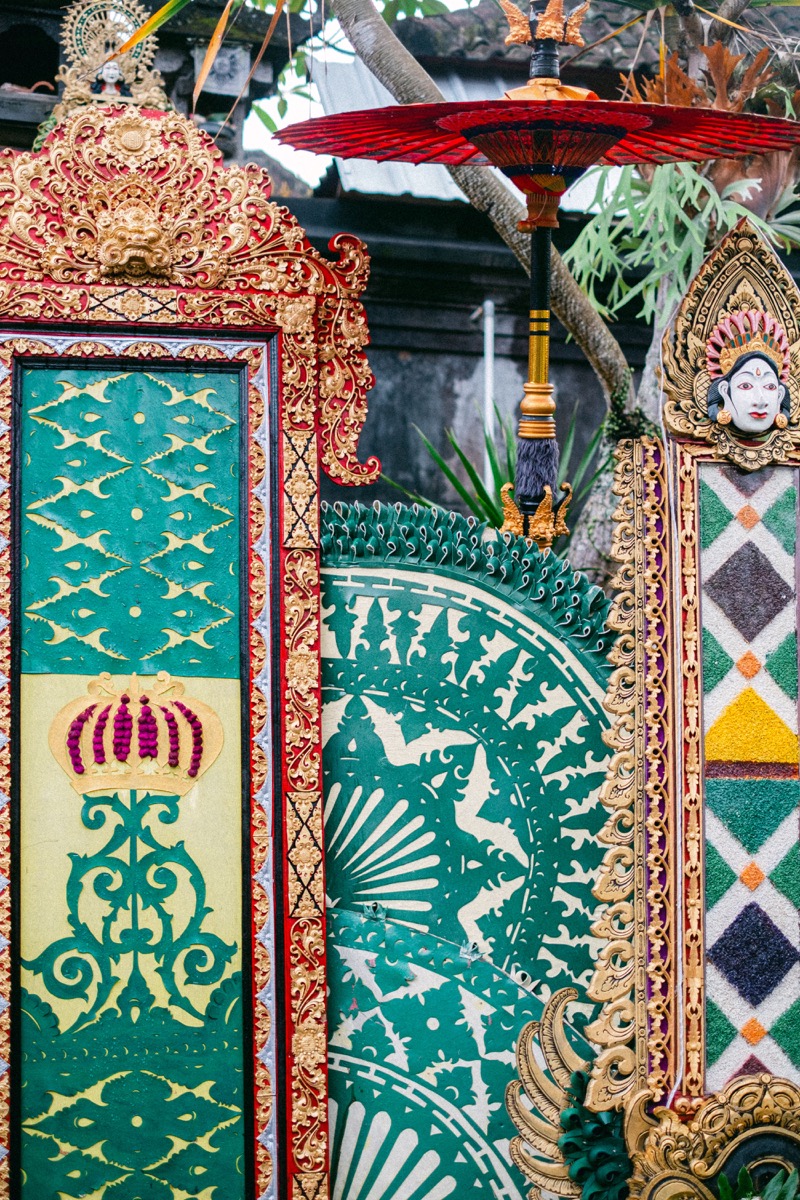
Bali runs on two calendars, a 210 day cycle and a lunar year, so every stay includes several holy days. Most are small: an offering and a short ceremony. Students take part as guests. Dates follow the Balinese calendars and often change, so the plan for each week moves with them. If the village holds a ceremony, the group goes.
Purnama and Tilem. Full moon and new moon, every month.
Tumpek Krulut. The ceremony for gamelan and musical instruments.
Tumpek Kandang. The ceremony for animals.
Tumpek Wayang. The ceremony for puppets and the performing arts.
Tumpek Landep. The ceremony for tools and metal objects. Students bring the tools they used all term.
Saraswati. The day of knowledge. Books are honoured and nobody reads.
Pagerwesi. Offerings for the strength of knowledge, four days after Saraswati.
Melasti. Processions to the sea or a spring in the days before Nyepi.
Ogoh ogoh parade and Nyepi. On the eve of Nyepi the villages parade their ogoh ogoh. On Nyepi itself the whole island goes silent for a day, and the airport closes.
Nasarin and melaspas. The ceremonies that open and complete a new building, held for the group's own pavilion.
Temple festivals. If the village invites the group, the gamelan players perform at a temple festival.
Before each Indonesian public holiday, students have a short lesson on what the day marks.
Home Culture Day
Halfway through the stay, the visiting group runs a day for Empathy students about their own country. They cook food from home, teach games, songs and dances, and lead a craft. It is the day the visitors become the teachers.
For visiting teachers
Your teachers keep teaching their own subjects alongside the program. Many units give them material to work with: the rice field maps and yields, the stream and rain data, the shadowless day measurement, the micro hydro model and the chemistry of the sugar cane rockets.
Questions from group leaders
Who is the program for?
High school groups travelling with their teachers, university groups, and adult groups such as teachers and organisations.
Can an individual student join?
No. The program is for groups. A school, university or organisation books it for its own group.
How long is the program?
A full semester, or a shorter stay built from the same activities. Tell us how long you have and we will plan around it.
When can groups come?
The program runs on the Empathy School calendar. Groups here in February and March join the ogoh ogoh build for Nyepi. Kites fly in the dry season winds from June. Tell us your dates and we will plan the weeks around the Balinese calendar for that time.
What are the hours?
School days from 9:00 to 15:00, with a few evening events and one overnight trip to Mount Batur.
Do students take part in ceremonies?
Yes, as guests. On the first day they learn temple dress and etiquette, and ceremonies are part of life in the village all year.
What language is the program in?
English, with a Bahasa Indonesia lesson every morning.
Can our own teachers keep teaching?
Yes. Visiting teachers teach their own subjects alongside the program, and many units give them material for science and maths lessons.
Where do groups stay?
Groups stay in accommodation near the campus. We can suggest places close by.
How do we book?
Send the enquiry form below with your group size and dates. Book well ahead, because trips and ceremonies are planned months in advance.
Plan a group visit
Tell us about your group and the dates you have in mind. We will reply with a plan for your weeks in Bali.